
You know that feeling? That intense, deep craving for fragrant, spicy, creamy Thai food that just screams comfort, but then you remember you’re trying to stick to Paleo, Low Carb, or Whole30 guidelines? Ugh, it used to feel like I had to choose flavor or my health goals. Not anymore! Seriously, mastering spicy recipes while keeping them clean feels like winning a tiny, delicious battle, and this Thai Chicken Coconut Curry Paleo Low Carb Whole30 recipe is my absolute champion. It comes together faster than ordering takeout, tastes richer than anything out of a carton, and truly delivers that authentic Thai punch without any sneaky sugars or grains hiding in the background. Trust me, this is the weeknight dinner that will make you fall back in love with restrictive eating!
Why This Thai Chicken Coconut Curry Paleo Low Carb Whole30 Recipe Works For You
When you’re juggling specific dietary needs, you usually expect compromises, right? Not here! This curry is designed to be your best friend when you need Thai flavor but can’t mess with your plan. It’s fast, it’s packed with flavor, and it keeps all the bad stuff safely out of the pot. Seriously, it’s a weeknight miracle for busy clean-eaters.
- It hits all the major buzzwords: Paleo, Low Carb, and Whole30 compliant!
- We are talking real food—no weird fillers or starches allowed in this pot.
- It’s speedy! Most of the 35 minutes total is just gentle simmering time.
Dietary Compliance: Paleo Low Carb Whole30
This recipe has zero wheat, zero dairy, zero added sugar, and zero soy, which is huge when you are following Whole30. Because we skip cornstarch or rice, it naturally keeps the carb count way down. It’s genuinely built on chicken, healthy fats from coconut milk, and fresh veggies. Zero guilt here, I promise!
Speed and Simplicity of Thai Chicken Coconut Curry
I timed myself last week just to make sure I wasn’t exaggerating—from the moment I pulled out the cutting board to the moment I was setting bowls on the table was just 35 minutes max. Most of that time is hands-off simmering where the flavors just deepen. You are literally just browning chicken, stirring in paste, adding liquids, and letting it go. It’s so simple!

Essential Ingredients for Authentic Thai Chicken Coconut Curry
Okay, talking about ingredients for a clean curry is where I get *really* serious. If you mess up one or two things here, you risk blowing your Whole30 commitment or adding unnecessary carbs. I’ve laid out exactly what you need below. Stick to this list, handle the chicken right, and you’ll be golden. Notice how we are relying on full-fat coconut milk? That’s your key to that rich, velvety sauce we all love.
- 1 tablespoon coconut oil
- 1 pound boneless, skinless chicken thighs, cut into bite-sized pieces
- 1 tablespoon red curry paste (check label for Whole30 compliance—don’t skip this check!)
- 1 (13.5 ounce) can full-fat coconut milk
- 1/2 cup chicken broth
- 1/2 cup sliced bell peppers (I love using half red and half yellow for color!)
- 1/4 cup sliced onion
- 1 tablespoon fish sauce
- 1 teaspoon fresh lime juice
- 1/4 cup fresh basil leaves, for garnish
- 1 tablespoon fresh cilantro, chopped, for garnish
Ingredient Notes and Substitutions for Thai Chicken Coconut Curry
This isn’t just a list, it’s a set of rules from my kitchen to yours! We have to be careful, especially when sticking to Paleo Low Carb Whole30. The flavor here comes from balancing salty, sour, and rich fat, not from sugar.
First, let’s talk about that red curry paste. This is critical. So many store-bought brands sneak in sugar, cane syrup, or even soy sauce, which immediately kicks you off Whole30. You need to flip that jar around and read the ingredients twice. If you can’t find one that’s totally clean, that’s okay! But if you find a brand you trust, buy two!

For flavor layering—and this is a pro move I learned from an old friend who used to live in Bangkok—add about 1/2 teaspoon of freshly grated ginger right when you add the curry paste. It gives the sauce this amazing sharp background note that just sings against the coconut. Wow, the aroma when that hits the hot oil is incredible!
Finally, if you taste it at the end and feel like the sauce is just a little too thin for your liking, don’t panic! Just remove the lid and let it simmer on low for another 5 to 10 minutes. Allowing it to cook uncovered lets that extra watery steam evaporate, naturally thickening your Thai Chicken Coconut Curry.
Equipment Needed for Your Thai Chicken Coconut Curry
Okay, so the beauty of this recipe is that it doesn’t require a million fancy gadgets. You don’t need any specialized appliance, which is why I love pulling this out on a Monday when I’m already exhausted!
You definitely need a good, sturdy cutting board and a sharp knife because we are chopping onion and peppers. Nothing slows me down like a dull knife—it’s dangerous and takes forever!
For the cooking part, you’ll need a large skillet or a good-sized pot. Since we are simmering liquid for a while, make sure whatever you use has high enough sides so the coconut milk doesn’t decide to bubble over onto your stovetop. Trust me, cleaning coconut milk splatter is no one’s idea of a good time.
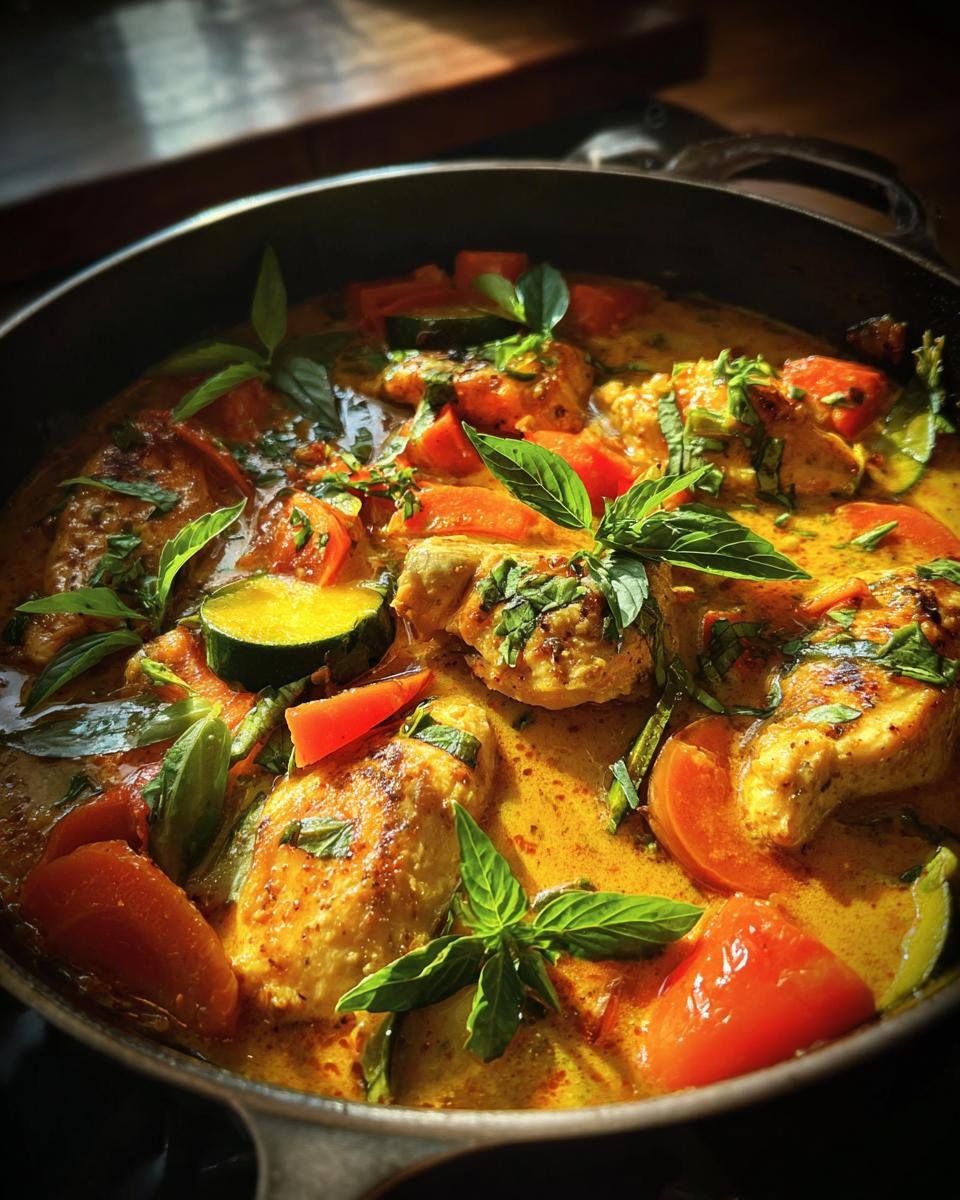
That’s really it! A measuring spoon for the fish sauce and lime juice, and that’s all you need for this incredibly flavorful Thai Chicken Coconut Curry Paleo Low Carb Whole30 dinner.
Step-by-Step Instructions for Perfect Thai Chicken Coconut Curry
Alright, let’s get cooking! This is the part where you stop reading and start smelling something amazing. Because this isn’t complicated baking where one wrong move ruins everything—this is curry! It’s forgiving, but we need to follow the sequence, especially with that red curry paste. I always find that when the paste hits the hot oil, the smell instantly transports me to a street stall somewhere warm. It’s pure culinary magic, and you’ll want to savor that moment while you stir it!
I know you might look at that list of steps and think it seems like a lot, but honestly, most of these are just waiting for liquid to heat up or veggies to soften. We’re going to move fast through the active parts.
Browning the Chicken for Thai Chicken Coconut Curry
Heat up your coconut oil in that big skillet over medium heat. Don’t be shy; we want it hot enough to sear the chicken a little, not just steam it. Add your bite-sized chicken thighs—and yes, thighs are better! They stay tender even if they simmer a little long, which is perfect for a weeknight meal.
You need to cook the chicken on all sides until it gets nicely browned. This step is important! Browning creates flavor that just simmering can’t achieve. I usually give it about five minutes total, turning the pieces often. Once they look good and golden, that’s when you move to step three.
Stir in your compliant red curry paste. This is the moment! Cook it for exactly one minute. Why one minute? Because that short blast of heat wakes up all the spices in the paste, making them super fragrant. If you rush this, the whole curry tastes flat. If you’re really into baking and precise timing, you might also appreciate the precision required in certain baking recipes, but trust me, this one minute for the curry paste is non-negotiable!
Simmering the Thai Chicken Coconut Curry Base
Time to build that creamy sauce! Pour in the full can of coconut milk and then the chicken broth. Give it a good stir to mix everything in, scraping up any yummy browned bits stuck to the bottom of the pan—that’s flavor gold right there. Turn the heat up until the whole mixture just starts to ripple and bubble gently—that’s bringing it to a simmer.
Once it’s simmering, immediately drop the heat down low. We don’t want a rolling boil where the coconut milk might separate weirdly. Now we add your colorful sliced peppers and the onion pieces. Cover the pot and let it gently simmer for 10 to 15 minutes. You’re waiting for two things here: the vegetables to become tender (so they aren’t crunchy!) and for the chicken to be cooked all the way through. Test a piece of chicken just to be sure!
When everything looks tender and cooked, turn off the heat. Stir in that tablespoon of fish sauce and the fresh lime juice. Taste it right there. Does it need a little zip? Add a tiny squeeze more lime. Need more salty depth? Add a dash more fish sauce. This final adjustment is what takes it from ‘good’ to ‘I can’t believe this is Whole30!’ Serve it piping hot, piled high with that fresh basil and cilantro on top.
Serving Suggestions for Your Thai Chicken Coconut Curry Paleo Low Carb Whole30 Meal
Honestly, this Thai Chicken Coconut Curry Paleo Low Carb Whole30 dish is so rich and satisfying all by itself, but if you are anything like me, you need something underneath to soak up all that gorgeous, creamy sauce. You can’t do rice, and you can’t do noodles, but that doesn’t mean we have to eat it plain from the bowl!
My absolute go-to method is cauliflower rice. I know, I know, you’ve heard it a million times, but hear me out: If you pulse the raw cauliflower in a food processor, you get the perfect texture that mimics grains. Sometimes I even sauté mine quickly with a tiny bit of salt so it absorbs flavor better. It’s the perfect low-carb carrier for this sauce.
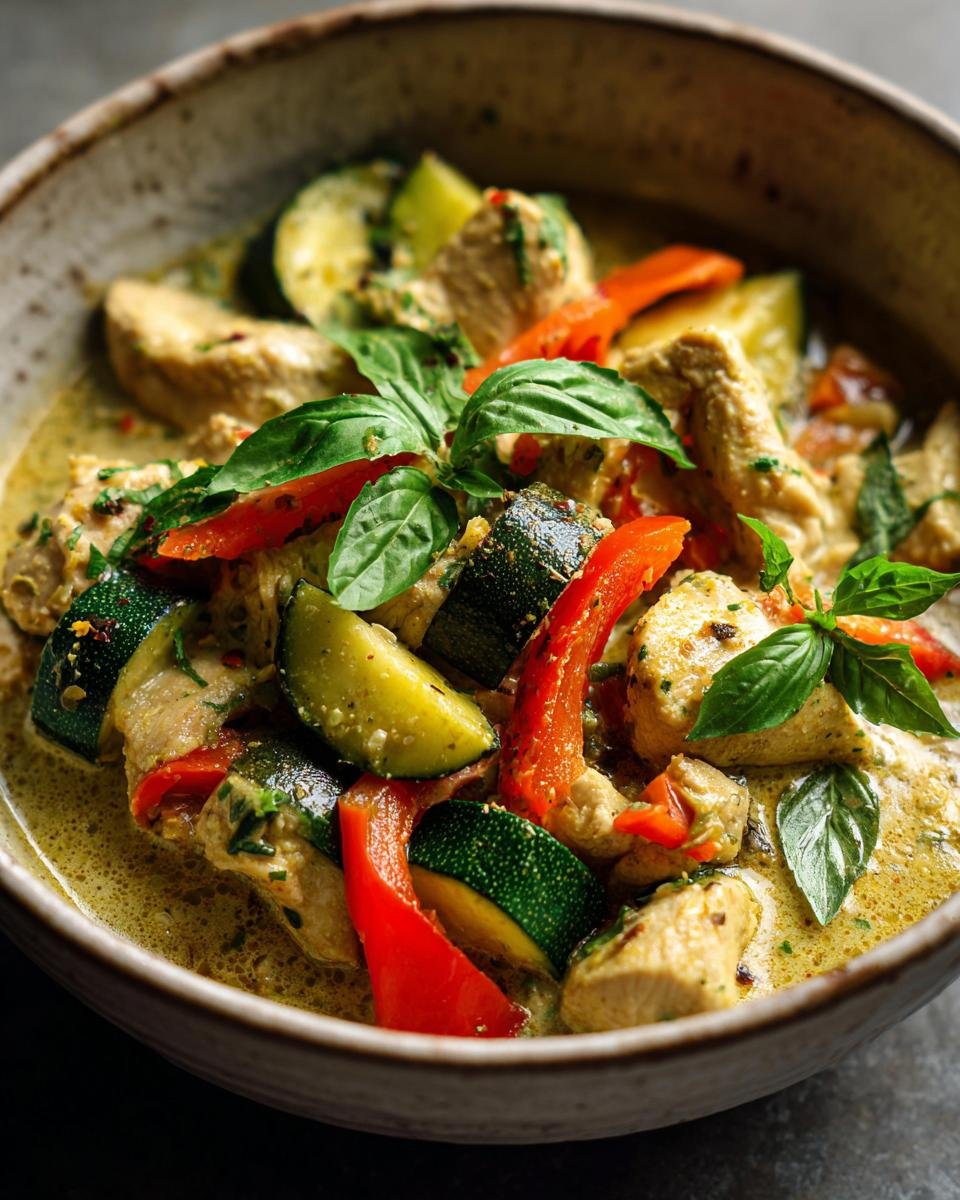
Another fantastic option, especially if you are eating this later in the week and want zero extra prep, is steamed or sautéed greens. Think about crisp broccoli florets, or even better, thinly sliced kale wilted right in the pan at the very end. The slight bitterness of the greens cuts through the richness of the coconut milk perfectly.
If you happen to be eating this on a day when you aren’t strictly counting carbs or are past the Whole30 phase, I sometimes throw leftover my lemon rice underneath for my husband, just so I can smell that comforting carb smell without ruining my whole dinner plan! But for clean eating, stick to the cauli-rice or greens—they really let the chicken and curry shine.
Storage and Reheating Instructions for Thai Chicken Coconut Curry
One of my favorite secrets about this Thai Chicken Coconut Curry Paleo Low Carb Whole30 recipe? It tastes even better the next day! Seriously, the flavors have time to meld together overnight. Since this recipe is pure healthy fats and protein, it stores beautifully, which is great news for meal prepping.
When you’re putting leftovers away, make sure you let the curry cool down slightly on the counter before sealing it up. Don’t put a huge hot pot of curry directly into the fridge—that warms everything up and might make your fridge work too hard. Once it’s just warm to the touch, transfer it into an airtight container. It keeps wonderfully in the refrigerator for about three to four days. I usually make a double batch just so I never have to worry about lunch the next day!
Now for reheating! Because we used full-fat coconut milk, we need to be a little gentle so we don’t shock the sauce. You definitely want to reheat this on the stovetop, not the microwave if you can help it. Slow and low is the name of the game here.
Put the leftover curry into a small saucepan over medium-low heat. If it seems really thick after being chilled (and it probably will, especially if you stuffed it full of peppers!), stir in a splash of extra chicken broth or just a little water. This helps loosen up that gorgeous sauce again. Stir frequently until it’s steaming hot all the way through. It shouldn’t take more than about 8 to 10 minutes this way.
If you happen to be in a real rush and have to use the microwave, be careful! Heat it in 60-second bursts, stirring well in between each blast. Microwaving can cause the coconut fat to separate if it gets too hot too fast, so patience wins again!
Tips for Making the Best Thai Chicken Coconut Curry
You’ve nailed the steps, you’ve checked the labels, and now you want to take this simple Thai Chicken Coconut Curry Paleo Low Carb Whole30 dish from ‘great’ to ‘absolute restaurant quality.’ That’s my kind of attitude! It’s all about those little expert touches that professional chefs do that never quite make it into the standard recipe card.
My favorite trick connects directly to that fish sauce we added at the end. Thai flavor is all about the holy trinity: salty, sour, and sweet (or in our case, savory, tangy, and rich). When you taste it at the end, you need to assess the balance. If it tastes flat, it usually needs more acid—a tiny splash more lime juice will brighten everything up immediately. If it tastes too sharp or too salty, add a little more broth or even a little bit of the fat skimmed from the top of the coconut milk can to mellow it out.
Speaking of coconut milk, here is a big one for texture: always use the *full-fat* can. I know they make light versions, but light coconut milk is mostly water, and it won’t give you that dreamy, thick sauce texture that coats the chicken. When you open the can, don’t shake it! Let it sit so the thick cream settles on top. Scoop that thick cream off first and stir it into the oil and curry paste *before* adding the thinner liquid underneath. This pre-emulsification step gives you creamy results every single time, eliminating that watery layer that sometimes happens.
Finally, don’t be scared of the heat level once you are past Whole30. But if you’re sticking to the rules, your best bet for escalating the spice is a few thin slices of fresh Thai chili peppers, added right when you add the onions. They infuse that slow, manageable heat throughout the whole curry without adding any non-compliant ingredients!
Frequently Asked Questions About Paleo Low Carb Whole30 Thai Chicken Coconut Curry
I totally get it! When you’re cooking with restrictions, you always have extra questions brewing. You want to make sure everything meshes perfectly with your diet plan, and sometimes substitutions just feel risky. I’ve gathered up the most common things people ask me about this easy Thai Chicken Coconut Curry Paleo Low Carb Whole30 favorite!
Can I substitute the chicken thighs in this Thai Chicken Coconut Curry?
Oh, this is the number one question! Yes, you absolutely *can* use boneless, skinless chicken breasts, but I honestly prefer the thighs here. Thighs have a little more fat marbled through them, which keeps them tremendously moist even if you let them simmer for that extra minute or two. If you use chicken breast, you need to watch the heat more carefully!
If you switch to chicken breast, I’d suggest cutting them into slightly bigger chunks—maybe 1.5 inches—and dropping the simmer time down to just 10 minutes, checking doneness frequently. Overcooked chicken breast in a curry is dry and chewy, and that defeats the whole purpose of eating something creamy and comforting!
How can I make this Thai Chicken Coconut Curry spicier?
If you’re Paleo or Whole30 and need more heat, you have great, clean options! If you are still strictly Whole30, skip the store-bought hot sauces because most of them contain sugar or vinegar that isn’t allowed yet. My favorite way is to add fresh heat right into the pot!
You can dice up one or two fresh Thai bird chilis (seeds in if you are brave!) and sauté those right along with the onion and bell pepper. Or, if you have Sambal Oelek that is confirmed compliant, a little dollop of that works wonders! If you are just Paleo or Low Carb, then a dash of your favorite gluten-free Sriracha at the end gives a nice familiar kick. But remember, the red curry paste contributes a baseline heat, so taste before you go crazy!
I once tossed in a pinch of dried cayenne pepper with the curry paste, and that gave it a really deep, underlying warmth that was fantastic. If you’re interested in making other substitutions or adapting recipes in general, sometimes you can find great cross-over tips over at Freddy’s baking spot, even though we aren’t baking here!
Nutritional Estimate for Thai Chicken Coconut Curry
Now, I know some of you tracking macros or staying strictly Keto/Low Carb want the numbers, so here they are! Since this Thai Chicken Coconut Curry Paleo Low Carb Whole30 recipe relies heavily on full-fat coconut milk, the fat content is satisfyingly high, which keeps us feeling full until the next meal. And since we skip rice or potatoes, we keep those total carbs way down!
We always have to remember one thing: these are estimates! I’m not a certified nutritionist, and the exact values can change wildly depending on whether your chicken thighs had more trimming, or exactly how much fish sauce you added during your final seasoning taste test. Use these numbers as a great benchmark for your daily planning, but understand they are approximate based on the ingredients listed above.
Here is the breakdown for approximately one serving:
- Serving Size: 1 serving
- Calories: 450
- Sugar: 4 grams
- Sodium: 450 mg
- Fat: 38 grams
- Saturated Fat: 30 grams
- Unsaturated Fat: 8 grams
- Trans Fat: 0 grams
- Carbohydrates: 8 grams
- Fiber: 2 grams
- Protein: 25 grams
- Cholesterol: 100 mg
See? That low carbohydrate count and high healthy fat profile are exactly what we want when we are sticking to Paleo or Low Carb plans. It’s so easy to get hungry again when you cut carbs, but the fat in this coconut curry keeps you satisfied all afternoon. Enjoy!
Print
Paleo Low Carb Thai Chicken Coconut Curry
- Total Time: 35 min
- Yield: 4 servings 1x
- Diet: Low Carb
Description
A simple, flavorful Thai chicken curry made with coconut milk, suitable for Paleo, Low Carb, and Whole30 diets.
Ingredients
- 1 tablespoon coconut oil
- 1 pound boneless, skinless chicken thighs, cut into bite-sized pieces
- 1 tablespoon red curry paste (check label for Whole30 compliance)
- 1 (13.5 ounce) can full-fat coconut milk
- 1/2 cup chicken broth
- 1/2 cup sliced bell peppers (any color)
- 1/4 cup sliced onion
- 1 tablespoon fish sauce
- 1 teaspoon fresh lime juice
- 1/4 cup fresh basil leaves, for garnish
- 1 tablespoon fresh cilantro, chopped, for garnish
Instructions
- Heat the coconut oil in a large skillet or pot over medium heat.
- Add the chicken pieces and cook until browned on all sides, about 5 minutes.
- Stir in the red curry paste and cook for 1 minute until fragrant.
- Pour in the coconut milk and chicken broth. Bring the mixture to a simmer.
- Add the sliced bell peppers and onion. Reduce heat to low and simmer for 10 to 15 minutes, or until the chicken is cooked through and the vegetables are tender.
- Stir in the fish sauce and lime juice. Taste and adjust seasoning if needed.
- Serve hot, garnished with fresh basil and cilantro.
Notes
- Use only Whole30 compliant red curry paste; many brands contain sugar or soy.
- For extra flavor, add 1/2 teaspoon of grated fresh ginger with the curry paste.
- If you prefer a thicker sauce, simmer uncovered for a few extra minutes.
- Prep Time: 10 min
- Cook Time: 25 min
- Category: Dinner
- Method: Stovetop
- Cuisine: Thai
Nutrition
- Serving Size: 1 serving
- Calories: 450
- Sugar: 4
- Sodium: 450
- Fat: 38
- Saturated Fat: 30
- Unsaturated Fat: 8
- Trans Fat: 0
- Carbohydrates: 8
- Fiber: 2
- Protein: 25
- Cholesterol: 100
Keywords: Thai, chicken, coconut curry, paleo, low carb, whole30, gluten free, dairy free