
Oh, there is just nothing that warms my soul like a perfect slice of homemade layer cake, especially when it screams tropical heaven! Forget those dry, crumbly cakes you get from a box mix. I’m here to tell you that achieving that unbelievably moist texture with a rich, thick layer of coconut frosting is actually ridiculously easy.
I remember burning the first batch trying to rush the mixing—oops! But trust me, after a few tries, I nailed this **Coconut Cake With Coconut Frosting**. The secret is keeping it simple and letting the buttermilk and oil do the heavy lifting for moisture. This is the recipe I trot out when I need a showstopper that doesn’t require me to spend all day elbow-deep in flour!
Why This Coconut Cake With Coconut Frosting Recipe Shines
When I first tried this recipe years ago, I was shocked at how fast it came together for such an impressive result. Honestly, I don’t know why anyone would buy a coconut cake when you can make this at home in about an hour of active time!
- It delivers unbelievable moisture thanks to the oil and buttermilk—it stays soft for days, which is rare for coconut cakes.
- The flavor hits hard! We use both coconut flakes and coconut extract, locking in that pure, sweet flavor.
- Prep is a breeze! Everything goes into the bowl at once (after the dry ingredients are mixed), which keeps things tidy. This is why it’s always my go-to. I even found some great tips on general baking confidence over at baking tips to make you a better baker.
Essential Ingredients for Your Coconut Cake With Coconut Frosting
Okay, the ingredient list actually looks long, but don’t panic! It’s mostly pantry staples, and that shredded coconut is the star of the show. I always tell people that if you want a real punch of coconut flavor, you should toast your shredded coconut just lightly in a dry pan until it smells amazing. It adds such a deep, nutty background note to the whole cake.
Even if you don’t toast it, just make sure you’re using the unsweetened kind for the cake so we can control the sugar!
Cake Batter Components
For the actual cake part, we keep it straightforward so that pretty white crumb stays perfect:
- 1 3/4 cups all-purpose flour
- 1 3/4 cups granulated sugar
- 1 teaspoon baking soda
- 1/2 teaspoon salt
- 1 cup unsweetened shredded coconut
- 1 cup buttermilk (If you ran out, check out how to make a super quick substitute right here: make buttermilk substitutions.)
- 1/2 cup vegetable oil
- 2 large eggs, room temperature is best!
- 1 teaspoon vanilla extract
- 1/2 cup water
Creamy Coconut Frosting Ingredients
Now for the frosting. This is a classic American buttercream base, which is incredible smooth if you follow one key rule: the butter MUST be soft. I mean, press your finger in and leave a gentle dent, but it shouldn’t look greasy or melted.
- 1 cup unsalted butter, softened
- 4 cups powdered sugar, sifted if you’re feeling fancy
- 1 teaspoon coconut extract (this really boosts that coconut punch!)
- 1/4 cup milk or cream
- Additional shredded coconut for garnish (this is where toasted coconut really shines!)
Step-by-Step Instructions for the Perfect Coconut Cake With Coconut Frosting
This is where the magic happens, but remember my biggest warning: when mixing cake batter, you want to stop stirring as soon as everything comes together. Overmixing develops gluten, and that makes a tough cake. We are aiming for tender and light here, so be gentle!
Preparing the Cake Layers
First things first, crank that oven up to 350 degrees F (175 degrees C). Get two 9-inch round cake pans ready by greasing them well and dusting them with flour. In a big bowl, whisk together all your dry things: the flour, sugar, baking soda, and salt. Now comes the fun part: toss in the coconut, buttermilk, oil, eggs, and vanilla extract. Mix it gently until it just vanishes—don’t keep going! Finally, stir in that cup of water until the batter looks beautifully smooth. Divide the batter super evenly between your two pans.

Baking and Cooling Procedures
Pop those babies into the hot oven for about 30 to 35 minutes. You’ll know they are ready when a wooden pick stuck right in the center comes out clean—no wet batter sticking! Let the cakes sit right in the pans for about 10 minutes. This resting time helps them firm up just enough so they don’t break when you flip them out. Then, carefully invert them onto a wire rack to cool completely. You must wait until they are stone cold before frosting, otherwise, you’ll have a puddle!
Crafting the Coconut Frosting
While the cakes take their sweet time cooling, let’s tackle that glorious frosting. Beat your softened butter in a clean bowl until it gets light and creamy—like whipped silk. Now, start adding your powdered sugar slowly, a cup at a time, mixing well after each addition. Once that’s smooth, beat in the coconut extract and the milk or cream until you hit that perfect, spreadable consistency. Don’t rush this creaming process; it makes the frosting fluffy!
Assembling Your Coconut Cake With Coconut Frosting
Once those layers are totally cool, it’s time to stack! Place the first layer down, generously slather on about a third of that heavenly coconut frosting, and gently set the second layer on top. Then, it’s time to frost the top and smooth it around the sides. Finally, take that extra shredded coconut and press it gently all around the sides and sprinkle it over the top! Wow, you made a dream!
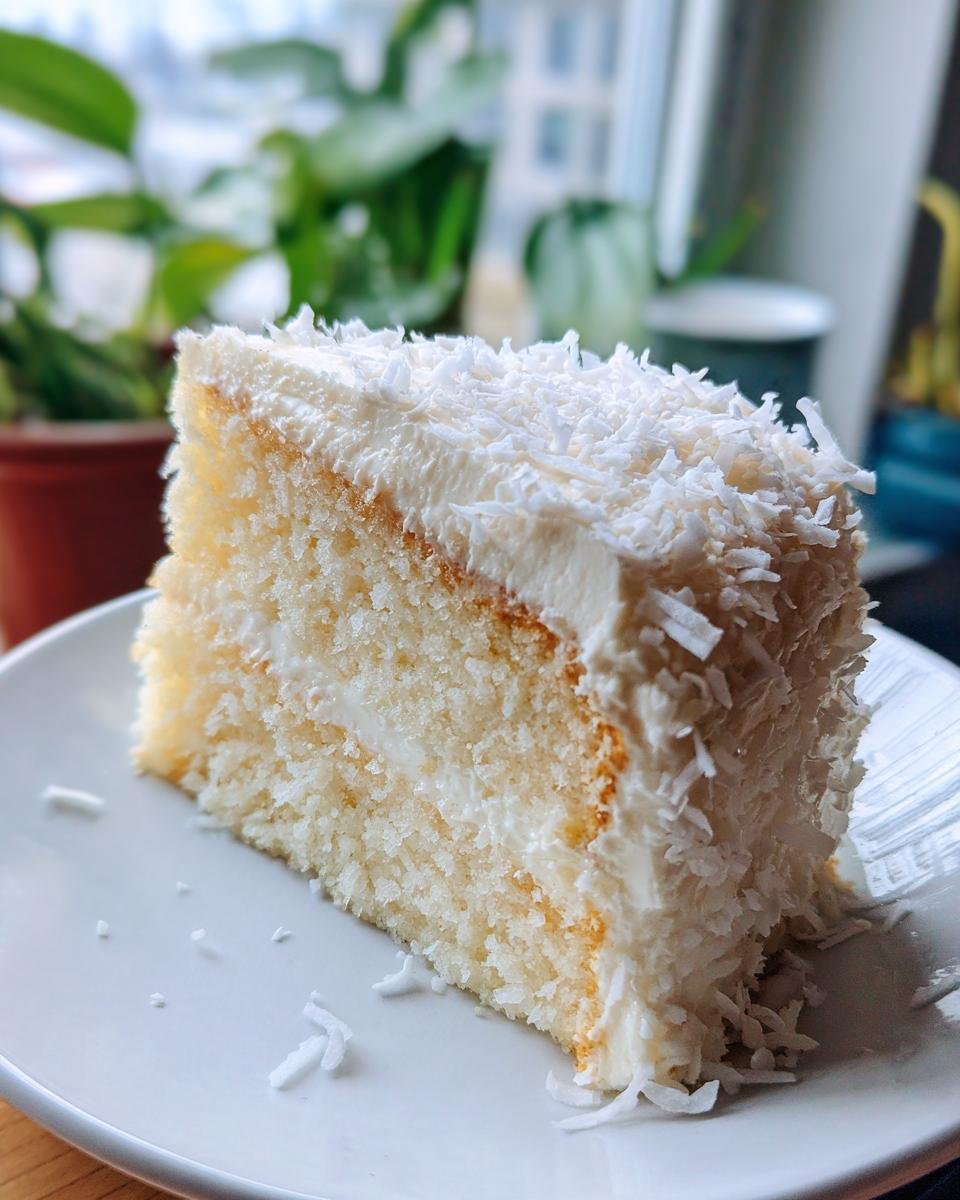
Tips for Success When Making Coconut Cake With Coconut Frosting
Seriously, this cake is sneaky in how easy it is, but a couple of tiny adjustments can take it from ‘great’ to ‘the best cake anyone has ever tasted.’ I learned these tricks the hard way, so you don’t have to!
First trick: if you like a really intense coconut flavor everywhere, try dissolving a teaspoon of the coconut extract into the measuring cup of water *before* adding it to the batter. It seems like a small thing, but I think the warm liquid helps distribute that extract flavor perfectly throughout the crumb.
Second, about that frosting consistency: if you whip it up and it looks a little too soft, don’t panic and add more milk! Pop the entire bowl into the fridge for about 15 minutes. Cold fat firms right up, and you can bring it back to perfect spreading consistency with just a minute or two of gentle mixing once it chills. This method is way better than just adding more sugar, which can make the frosting gritty.
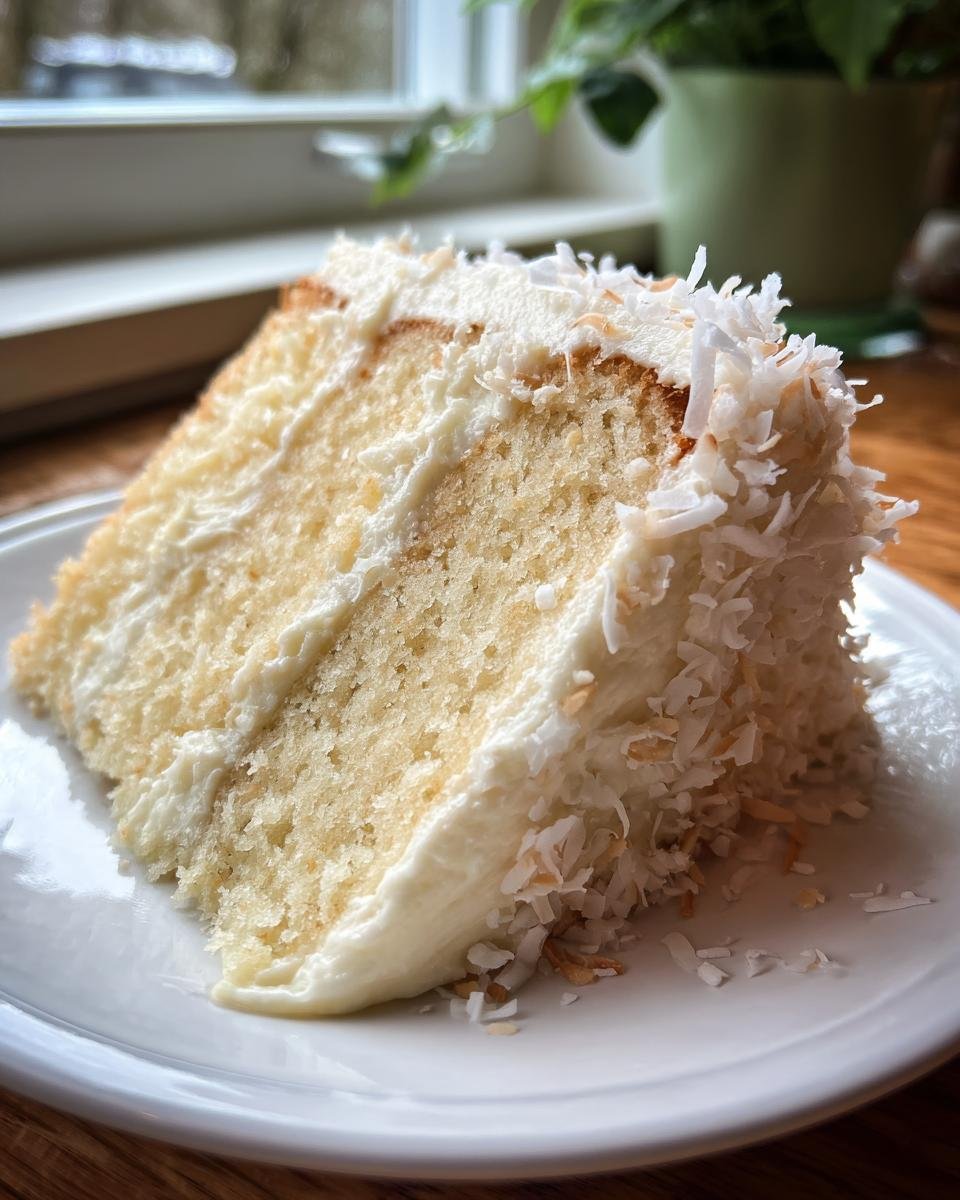
And if you’re having trouble getting a truly smooth top layer, try warming your offset spatula in hot water for just a second—dry it off really well—and then use the warm metal to glide across the top layer of frosting for that bakery finish. It’s a neat trick I picked up; you can always find more great advice at baking tips to make you a better baker.
Ingredient Notes and Substitutions for Your Coconut Cake With Coconut Frosting
I know sometimes you open the fridge and realize you’re missing one crucial thing, like buttermilk. It happens to the best of us! Thankfully, this recipe is pretty forgiving, especially if you follow the quick fix for sad milk.
Since we use vegetable oil for tenderness, you can totally swap that out for an equal amount of melted, but slightly cooled, coconut oil if you want to push the flavor profile even further. Don’t use butter here, though; oil keeps the crumb much softer in this specific recipe.
If you absolutely cannot find coconut extract, honestly, use an extra half teaspoon of vanilla extract, but make sure you toast that shredded coconut really well. Toasting brings out so much natural coconut flavor that you might not even miss the extract! If you need to whip up that buttermilk right now, just check out my guide on make buttermilk substitutions; it takes five minutes!
Storage and Reheating Instructions for Coconut Cake With Coconut Frosting
This beautiful coconut cake, with all that rich coconut frosting, travels well! Because the frosting is butter-based and not cream cheese, I usually leave it sitting on the counter under a cake dome for up to two days. It stays softest that way, and honestly, the butter firms up naturally at room temperature.
If you have serious leftovers, or if your kitchen is super hot, pop it into the fridge. Just make sure to pull a slice out about 30 minutes before serving so the frosting gets soft again. You barely need to reheat this cake, but if you must, a few seconds in the microwave for an individual slice works wonders to bring back that fresh-baked softness. Don’t microwave the whole thing!
Serving Suggestions for This Coconut Cake With Coconut Frosting
This cake is so rich and sweet, it stands up beautifully on its own, but I love pairing it with something tangy! A strong, dark roast coffee is my absolute favorite partner; the bitterness cuts right through the sweetness of the frosting.
If you’re serving it after dinner, try a light side of fresh raspberries or maybe even a small bowl of macerated pineapple to keep that tropical vibe going. Honestly, just putting it on your best serving platter makes it look like a million bucks—it truly needs no extra fanfare!
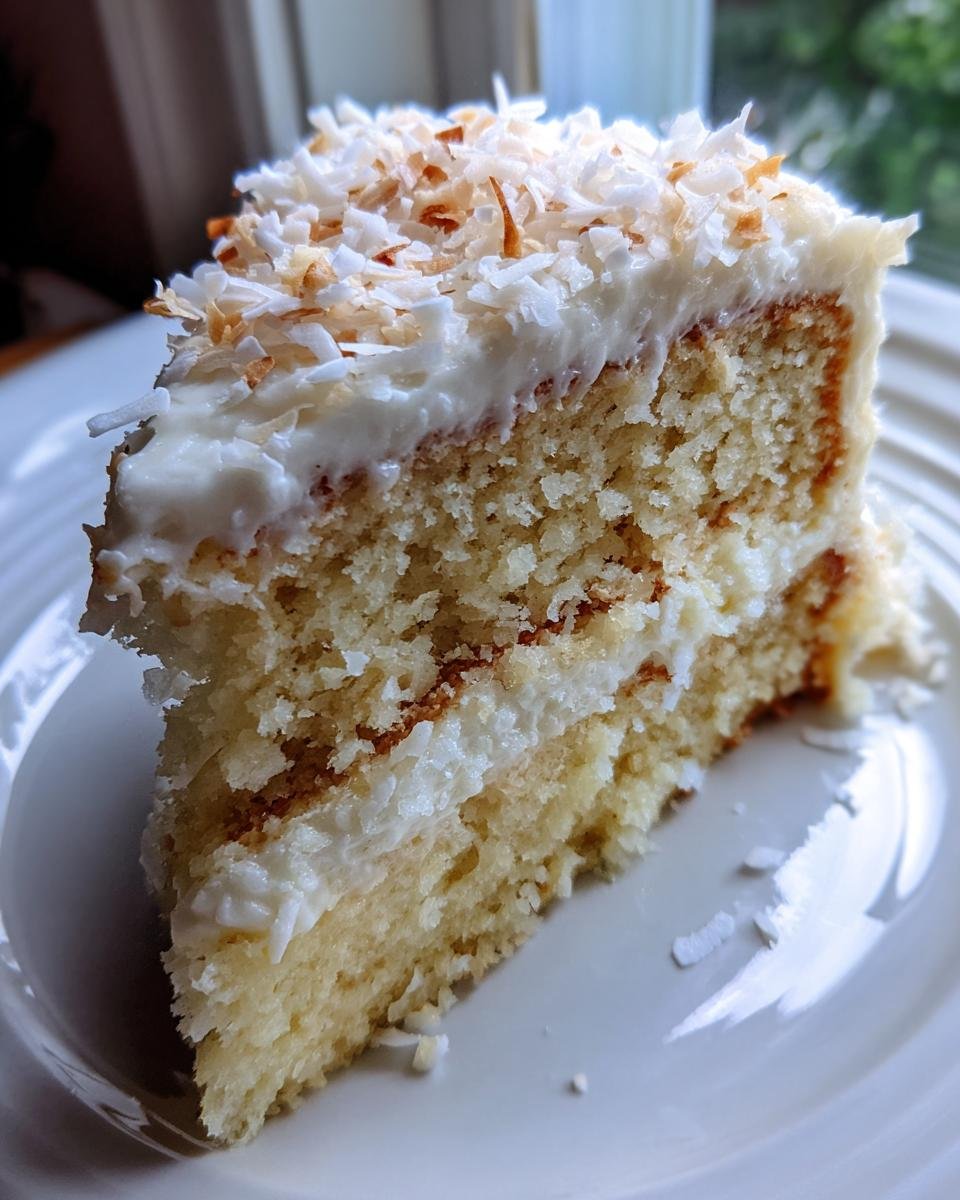
Frequently Asked Questions About Coconut Cake With Coconut Frosting
I get asked about this cake all the time! People want to know how to boost the coconut flavor or how to fix frosting struggles. Because this cake depends on that perfect moist crumb, people have a few classic concerns. Here are the things I hear most often when folks try this recipe for the first time.
Can I make this Coconut Cake With Coconut Frosting vegan?
Oh, you absolutely can try! It takes a little swapping around, but it’s totally doable. For the eggs, you’ll want a good egg replacer meant for baking—one package usually substitutes two eggs. Instead of buttermilk, use your favorite plain plant-based milk mixed with a tablespoon of apple cider vinegar and let it sit. And for the frosting, just use a vegan butter stick instead of the dairy butter, and make sure your milk/cream is plant-based too!
How do I prevent my frosting from becoming runny?
This is usually the butter being too warm, or maybe adding the liquid (milk/cream) too fast. If it’s already runny, don’t just slather it on the cake; it’ll melt right off! Take the whole bowl and pop it in the fridge for about 15 minutes. Chilling helps the fat firm up fast. Use a hand mixer to whip it again for 30 seconds once it’s cooler. If it’s still too soft, just sift in an extra half cup of powdered sugar until it holds its shape again. You can read about making smooth white frosting in an easy recipe guide for comparison too, it’s a classic technique I found here: make white frosting easy recipe.
Can I use sweetened coconut in the cake batter?
I strongly advise against it for the cake batter itself. Sweetened coconut already has sugar added to it, and since this recipe is already perfectly balanced with 1 3/4 cups of sugar, adding the sweetened flakes on top of that will make the whole cake taste a little too sweet and can even affect the structure.
If that’s all you have in your pantry, reduce the granulated sugar in the dry ingredients by a half cup to compensate. But trust me, using the unsweetened kind in the batter and then using sweetened, toasted coconut just for the garnish on top gives you the best flavor contrast!
Estimated Nutritional Snapshot
Now, let’s talk numbers, though honestly, when you make something this good, who is really counting? Here’s a rough idea of what one slice of this dreamy Coconut Cake With Coconut Frosting might look like:
- Serving Size: 1 slice
- Calories: 450
- Sugar: 55g
- Fat: 24g
- Protein: 5g
Keep in mind, these are just estimates pulled from general databases. If you use vegan butter or different coconut brands, your final counts will shift a bit! This is just a guide, not a scientific report, so enjoy that slice!
Print
Simple Coconut Cake with Coconut Frosting
- Total Time: 55 min
- Yield: 10 servings 1x
- Diet: Vegetarian
Description
A straightforward recipe for a moist coconut cake topped with creamy coconut frosting.
Ingredients
- 1 3/4 cups all-purpose flour
- 1 3/4 cups granulated sugar
- 1 teaspoon baking soda
- 1/2 teaspoon salt
- 1 cup unsweetened shredded coconut
- 1 cup buttermilk
- 1/2 cup vegetable oil
- 2 large eggs
- 1 teaspoon vanilla extract
- 1/2 cup water
- 1 cup unsalted butter, softened (for frosting)
- 4 cups powdered sugar (for frosting)
- 1 teaspoon coconut extract (for frosting)
- 1/4 cup milk or cream (for frosting)
- Additional shredded coconut for garnish
Instructions
- Preheat your oven to 350 degrees F (175 degrees C). Grease and flour two 9-inch round cake pans.
- In a large bowl, whisk together the flour, sugar, baking soda, and salt.
- Add the shredded coconut, buttermilk, oil, eggs, and vanilla extract to the dry ingredients. Mix until just combined.
- Stir in the water until the batter is smooth.
- Divide the batter evenly between the prepared cake pans.
- Bake for 30 to 35 minutes, or until a wooden pick inserted into the center comes out clean.
- Let the cakes cool in the pans for 10 minutes before inverting them onto a wire rack to cool completely.
- For the frosting, beat the softened butter in a large bowl until creamy.
- Gradually add the powdered sugar, mixing until smooth.
- Beat in the coconut extract and milk or cream until the frosting reaches a spreadable consistency.
- Once the cakes are completely cool, frost the first layer, place the second layer on top, and frost the top and sides of the cake.
- Sprinkle the top and sides with extra shredded coconut.
Notes
- For a stronger coconut flavor, toast the shredded coconut slightly before adding it to the batter or using it for garnish.
- If you do not have buttermilk, mix 1 cup of milk with 1 tablespoon of white vinegar or lemon juice and let it sit for 5 minutes.
- Prep Time: 20 min
- Cook Time: 35 min
- Category: Dessert
- Method: Baking
- Cuisine: American
Nutrition
- Serving Size: 1 slice
- Calories: 450
- Sugar: 55g
- Sodium: 250mg
- Fat: 24g
- Saturated Fat: 14g
- Unsaturated Fat: 10g
- Trans Fat: 0.5g
- Carbohydrates: 60g
- Fiber: 2g
- Protein: 5g
- Cholesterol: 60mg
Keywords: coconut cake, coconut frosting, layer cake, sweet dessert, vanilla cake