
Welcome, everyone! If you’re looking for a dish that stops traffic at the dinner table and makes any meal feel like a major celebration, you’ve come to the right place. Forget your weeknight sides; we are diving headfirst into something truly spectacular. I remember the first time I saw a proper serving of **Persian Jeweled Rice**, or Shirin Polo. It looked like someone sprinkled rubies, emeralds, and gold dust over the fluffiest cloud imaginable! It’s more than just a side dish; it’s the centerpiece. Trust me, making this rice—with its vibrant saffron, sweet fruits, and crunchy nuts—makes you feel like royalty, and it’s much easier than you think.

Why This Persian Jeweled Rice Recipe Shines
I get asked all the time what makes Shirin Polo so special compared to a regular saffron rice mix. Honestly, it’s the marriage of textures and colors! It’s festive without being fussy. Once you nail the soaking and steaming, you’ll have restaurant-quality rice every time. Here’s why I keep coming back to this specific approach:
Visually Stunning Presentation
Those little barberries turn bright red when you sauté them, looking exactly like tiny, tart jewels scattered everywhere. When you mix in the bright green pistachios and golden almonds against the yellow saffron rice? Wow! It looks like you spent hours creating edible art, even if you followed the steps quickly.
Perfectly Fluffy Basmati Texture
The secret sauce here isn’t just the flavor; it’s preventing that sticky, heavy texture that ruins good basmati. By rinsing the rice until the water is clear and giving it that long soak, you ensure every grain swells evenly. Then, the par-boil and slow steam mean you end up with separated, light grains that aren’t glued together. That’s expertise right there!
Gathering Ingredients for Persian Jeweled Rice
Okay, this is where the fun starts, but pay attention because precision matters here, especially with the specialty stuff. We’re using Basmati rice, and you absolutely must rinse it until the water runs crystal clear—no excuses! That starch has to go if we want fluffy grains.
For the jewels, we need those gorgeous, tart barberries, known as *zereshk*. Make sure you rinse them gently before we hit them with heat later. The nuts—slivered almonds and shelled pistachios—need to be ready for a little toast in butter to bring out their flavor. Don’t forget the secret weapon that gives the whole dish its signature glow: saffron threads! You only need a half teaspoon, but you have to steep them properly in 1/4 cup of hot water so that color really bleeds out.
Also, I’ve linked over here if you ever run into trouble measuring liquids or need tips on creating substitutes for pantry staples; sometimes you just have to improvise, though I prefer sticking to this classic list! You can check out some of my general kitchen swaps right here on my pantry page. But for this recipe, stick to the list:
- 2 cups Basmati rice (rinsed well!)
- 4 cups salty water for soaking
- 1/2 cup slivered almonds and pistachios
- 1/2 cup dried barberries (zereshk)
- 1/4 cup dried orange peel strips
- 1 tablespoon sugar, plus cardamom and salt
Step-by-Step Instructions for Perfect Persian Jeweled Rice
Alright, buckle up, because while the ingredient list looks fancy, the process is just about rhythm and timing. It takes a little patience upfront—mostly waiting for that soak time—but once you get going, it flies! If you’re ever struggling with sticky rice in general, I have a post about general baking techniques that really helps with grain separation; you can check out those tips here.
Preparing the Basmati Rice Base
First things first: you need time! Rinse that rice until the water is spotless. Then, get it into a bowl with salted water and just let it sit there for a minimum of two hours—honestly, three hours is even better for maximum fluff. Once soaked, drain it completely. Now, bring four cups of fresh water to a rolling boil, throw the rice in, and cook it hard for just about five to seven minutes. We want it *al dente*—tender on the outside but still slightly firm in the very center. Drain that rice immediately! Don’t let it sit, or it gets mushy.
Creating the Jewels (Nuts and Barberries)
While the rice is draining, we work on our toppings. Take that teaspoon of butter and sauté your barberries with a little sugar for just 60 seconds—be quick, they can burn fast! Set those aside. Then, use another teaspoon of butter to toast your slivered almonds and pistachios until they are just golden brown. You’re looking for crunch, not char, so keep an eye on them!
Steaming the Persian Jeweled Rice (Tahdig Technique)
This is where we build that famous crisp layer, the *tahdig*. Melt the rest of your butter right in the bottom of your non-stick pot—and I mean, make sure that entire bottom surface is coated! Add a super thin layer of plain, drained rice over that butter. This acts as the protective barrier.
Now, take your saffron water and cardamom and gently fold that mixture into about half of the remaining rice. Layer this saffron rice mixture over the plain base layer. Top that with the rest of your plain rice. Grab a wooden spoon handle and poke a few holes straight down to the bottom. These steam vents are crucial! Cover the pot opening with a clean kitchen towel, place the lid on tight, and steam it. Five minutes on medium heat to get it going, then drop it down to low for a solid 40 to 50 minutes. That slow steam guarantees everything comes out perfectly light and fluffy underneath the crust.

Expert Tips for Unforgettable Persian Jeweled Rice
I’ve made this recipe so many times I swear I can feel when the rice is done without even setting a timer! But look, to jump from “good” jeweled rice to “unforgettable,” you need to pay attention to two key areas: the saffron and the crust. Don’t skip the prep work here, because that’s where the magic gets locked in for an amazing final plate.
Saffron Thread Activation
Listen to me: you can’t just toss dry saffron threads onto the rice and expect results. That’s just sad, yellow rice! You have to steep those threads in the hot water for at least ten minutes before you even touch the rice with them. That hot water acts like a key, unlocking the deep color and that earthy, floral aroma. If you don’t steep it, you waste your good saffron, and you miss out on that gorgeous, true gold color we’re aiming for.
Achieving the Crispy Tahdig Layer
That crunchy bottom layer, the *tahdig*, is everyone’s favorite part, right? It’s all about that initial fat layer in the pot. You need enough butter—or oil if you prefer—to completely coat the bottom of the pan *before* you add that very first thin layer of rice. If the butter doesn’t cover every single spot, you end up with patches of crust and patches of sticky rice. Make sure that base layer is thin, even, and sizzling slightly when you put it down over the heat. That fat is your ticket to the crispiest, crunchiest layer possible!
Variations on Classic Persian Jeweled Rice
While my heart belongs to the original recipe with those sharp orange peels, this Persian Jeweled Rice really invites you to play a little bit! It’s incredibly flexible, which is probably why it shows up at so many different celebrations. If you can’t track down those specific dried orange peel strips, don’t panic!
The recipe notes mention that you can easily swap those out for something softer and sweeter. I often use dried apricots, chopped up, or stick with simple raisins. If you use dried fruit, just make sure you soak them in a little warm water for about 15 minutes beforehand. This keeps them from sucking moisture right out of your beautiful rice while it steams. Trust me, we want all the moisture in the Basmati grains!
If you want to bulk up the texture even more, try folding in some finely diced, sautéed carrots along with the nuts during the final mix. You don’t need much, just enough to add another layer of color and sweetness. It just makes the final presentation even richer! The key is to keep the saffron rice base the star and just deck it out with your favorite dried goodies.
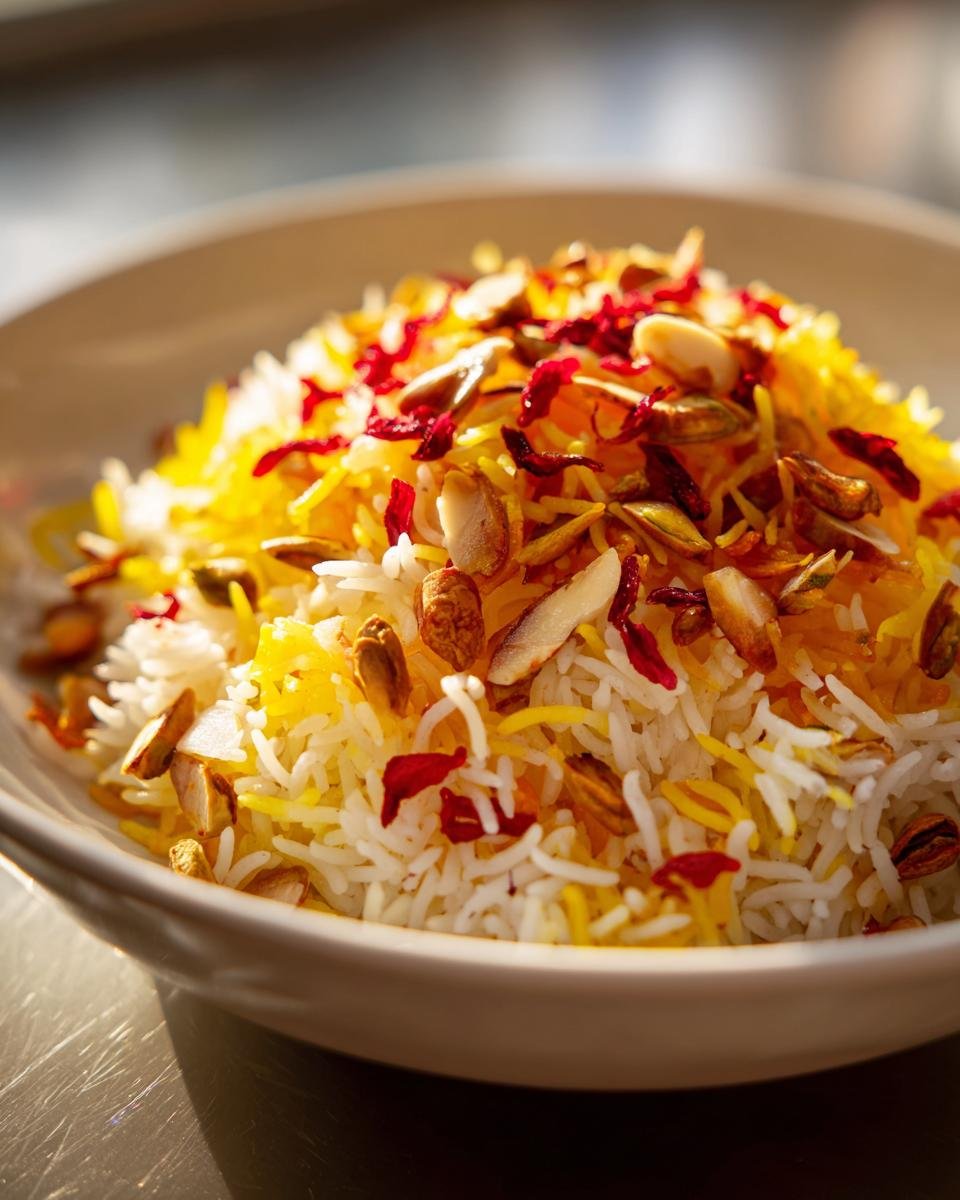
Serving Suggestions for Your Persian Jeweled Rice
So, you’ve got this stunning, jewel-toned rice ready to go—what goes next to it on the plate? Since this dish is so rich with nuts, fruits, and expensive saffron, you want the main protein to be something that complements those flavors without overpowering them. Think clean, fragrant, and comforting.
My first suggestion, especially for a big holiday when you want to really show off, is something beautifully roasted. A slow-roasted chicken, rubbed simply with lemon, maybe a little garlic, and fresh herbs like thyme or rosemary, pairs perfectly. The simplicity of the chicken lets the rice truly be the star of the show.
For a richer meal, you absolutely need lamb. If you’re feeling ambitious and want everyone talking for weeks, I’d highly recommend making a perfectly seasoned roasted rack of lamb to go alongside it. The earthiness of the lamb is fantastic against the little bursts of tart flavor from the barberries in the rice.
If you need something lighter, even a simple, high-quality yogurt dip or some fresh herbs wrapped up on the side works wonders. Remember, this rice is already packed with amazing flavor, so don’t serve it with anything too heavily spiced or sauced!
Storing Leftover Persian Jeweled Rice
I hope there are leftovers because this rice is surprisingly good the next day! To keep it fresh, you have to treat it right. Once it cools down a bit, pack it into an airtight container. You can absolutely freeze any extra portions for later—just make sure you use freezer-safe bags. It lasts great for about a month!
When you reheat it, you have to be quick about it. The microwave works fastest, but add just a teaspoon or two of water to the container before warming it up. This stops the rice from drying out too much. Just be warned, that gentle steaming process we used to make it fluffy the first time is hard to replicate perfectly later, so the texture might be a little less delicate, but the flavor is still amazing!
Frequently Asked Questions About Persian Jeweled Rice
I get so many questions rolling in after people try making this dish for the first time, which tells me you guys are loving it! It’s normal to have questions when you’re working with saffron and rice; it’s an exact science sometimes. If you’re curious about making a different rice recipe, I have a great article on lemon rice that’s super bright and flavorful, too, which you can find here!
Can I make Persian Jeweled Rice ahead of time?
You totally can! It holds up pretty well, actually. I usually cook it completely, let it cool on the counter for a bit until it’s just warm, and then I store it in the fridge. When you reheat it, you just have to be gentle—a quick zap in the microwave with a tiny splash of water usually does the trick to revive the steam. Just know that after a day or two, the nuts might lose just a tiny bit of their fresh crunch, but the flavor is still there!
What is Zereshk and where can I find it?
Ah, *zereshk*! Those are the dried barberries, and they are the tart little champions of this dish. They bring that sharp, almost cranberry-like zing that cuts through the richness of the butter and the sweetness of the orange peel. You won’t usually find them tucked away in the normal spice aisle at your local mega-mart. I usually have the best luck finding good quality, vibrant red ones at Middle Eastern specialty grocery stores. If you don’t have one nearby, honestly, online sourcing is probably your best bet these days. They’re worth tracking down for this authentic Shirin Polo!
Is it possible to skip soaking the basmati rice?
Oh, please, don’t skip it! Remember how I told you the soaking is essential for rinsing off the surface starch? If you skip that two-hour soak, you’ll end up with rice that cooks unevenly. You’ll have parts that are mushy and stuck together, and other parts that are still hard in the center. That long soak ensures every single grain of Basmati swells up uniformly, so when you go to steam it, you get that picture-perfect, separated, fluffy texture that makes the entire **Persian Jeweled Rice** worth making!
Nutritional Estimate for Persian Jeweled Rice
Now, a little note on the numbers here. Because this dish relies heavily on butter for forming that perfect bottom crust (*tahdig*) and uses dried fruits for flavor, it does pack a little bit of a caloric punch—but trust me, it’s worth every bite! These numbers are just an estimate based on what I use in my kitchen, so if you go heavy on the pistachios or use less oil, yours might check out slightly differently.
For approximately one cup of this rich rice:
- Calories: Around 450
- Fat: About 15 grams (mind that butter!)
- Carbohydrates: Roughly 75 grams
- Protein: Comes in around 10 grams
- Sugar: Generally 12 grams (thanks to those dried fruits and the touch we add to the barberries!)
It’s a festive dish, so we aren’t aiming for low-cal here, we’re aiming for deliciousness! Enjoy it!
Nutritional Estimate for Persian Jeweled Rice
Now, a little note on the numbers here. Because this dish relies heavily on butter for forming that perfect bottom crust (*tahdig*) and uses dried fruits for flavor, it does pack a little bit of a caloric punch—but trust me, it’s worth every bite! These numbers are just an estimate based on what I use in my kitchen, so if you go heavy on the pistachios or use less oil, yours might check out slightly differently.
For approximately one cup of this rich rice:
- Calories: Around 450
- Fat: About 15 grams (mind that butter!)
- Carbohydrates: Roughly 75 grams
- Protein: Comes in around 10 grams
- Sugar: Generally 12 grams (thanks to those dried fruits and the touch we add to the barberries!)
It’s a festive dish, so we aren’t aiming for low-cal here, we’re aiming for deliciousness! Enjoy it!
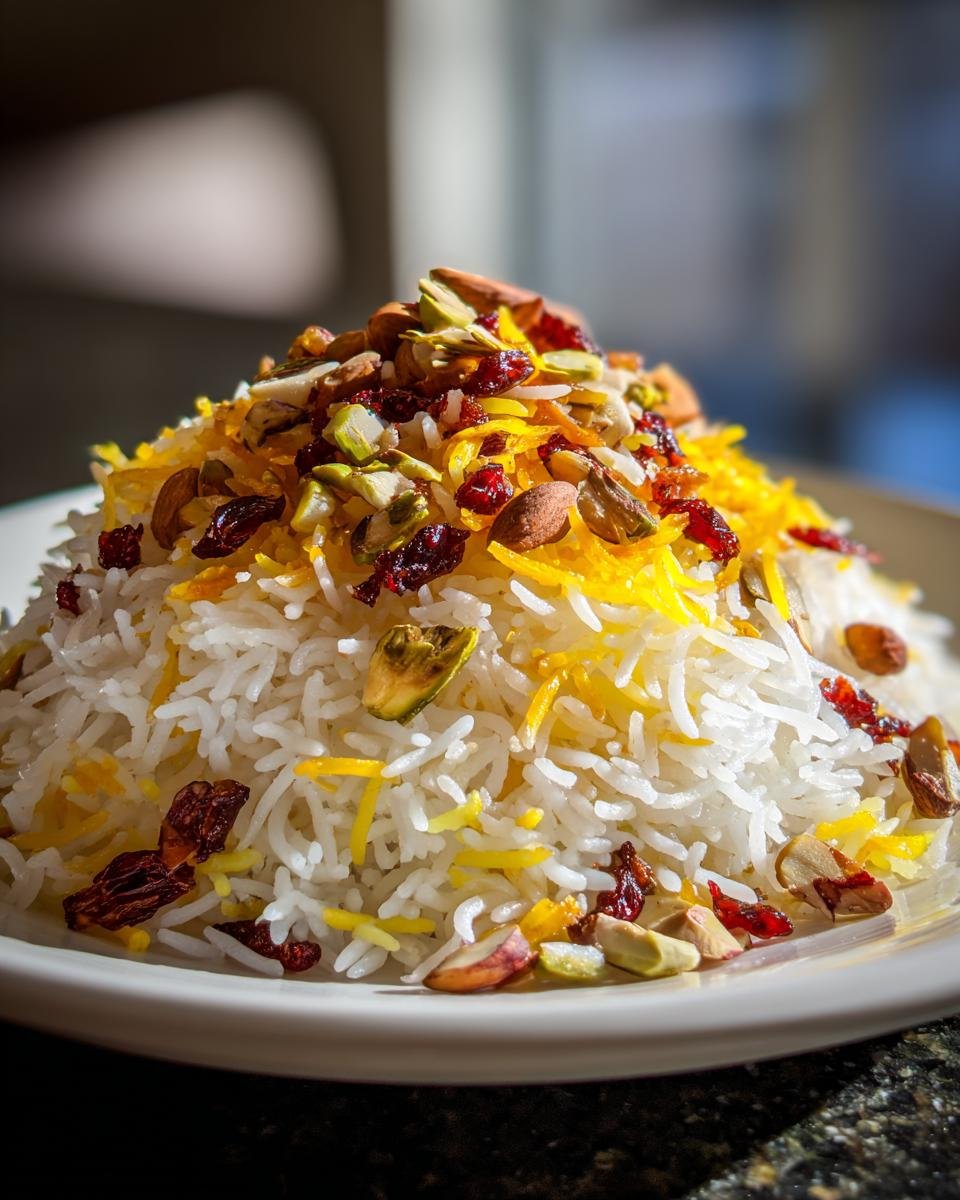

Persian Jeweled Rice (Shirin Polo)
- Total Time: 3 hours 15 min
- Yield: 6 servings 1x
- Diet: Vegetarian
Description
A festive Persian rice dish featuring saffron, dried fruits, and nuts.
Ingredients
- 2 cups basmati rice
- 4 cups water for soaking
- 1/2 teaspoon saffron threads
- 1/4 cup hot water
- 2 tablespoons butter or oil
- 1/2 cup slivered almonds
- 1/2 cup shelled pistachios
- 1/2 cup dried barberries (zereshk)
- 1/4 cup dried orange peel strips
- 1 tablespoon sugar
- 1/4 teaspoon ground cardamom
- Salt to taste
Instructions
- Rinse the rice several times until the water runs clear. Soak the rice in salted water for at least 2 hours.
- Steep the saffron threads in 1/4 cup of hot water for 10 minutes.
- Drain the soaked rice. Boil 4 cups of water in a large pot, add the rice, and cook until the grains are slightly tender but still firm (al dente), about 5-7 minutes. Drain immediately.
- Rinse the barberries briefly and sauté them in 1 teaspoon of butter with the sugar for 1 minute. Set aside.
- In a small pan, toast the almonds and pistachios in 1 teaspoon of butter until lightly golden. Set aside.
- Melt the remaining butter in the bottom of a non-stick pot. Add a thin layer of rice to coat the bottom.
- Gently mix the remaining rice with the saffron water and cardamom. Layer half of this saffron rice over the bottom layer.
- Layer the remaining plain rice on top. Make a few holes in the rice with the handle of a wooden spoon to allow steam to escape.
- Cover the pot with a clean kitchen towel, then place the lid on tightly. Cook on medium heat for 5 minutes, then reduce heat to low and steam for 40-50 minutes until the rice is fluffy.
- Gently fluff the rice with a fork. Fold in the toasted nuts and half of the barberries.
- Serve the rice on a platter, topping with the remaining barberries and orange peel strips.
Notes
- For a crisp bottom layer (tahdig), ensure the butter completely covers the bottom of the pot before adding the first layer of rice.
- You can substitute dried apricots or raisins for the orange peel if desired.
- Prep Time: 2 hours 15 min (includes soaking)
- Cook Time: 1 hour
- Category: Side Dish
- Method: Steaming
- Cuisine: Persian
Nutrition
- Serving Size: 1 cup cooked
- Calories: 450
- Sugar: 12
- Sodium: 150
- Fat: 15
- Saturated Fat: 6
- Unsaturated Fat: 9
- Trans Fat: 0
- Carbohydrates: 75
- Fiber: 4
- Protein: 10
- Cholesterol: 20
Keywords: Persian rice, jeweled rice, shirin polo, saffron rice, basmati, festive rice