
Oh my gosh, if you are craving something that is pure air, joy, and melt-in-your-mouth deliciousness, you have come to the absolute right place! There is nothing quite like biting into a perfectly puffed pastry that’s light as a cloud but still has that perfect structure. Forget those heavy, dense baked goods for a minute, because today we are diving headfirst into tradition with my favorite authentic recipe for Cavacas Portuguese Popovers. These little beauties are honestly what I whip up when I need a quick taste of Portugal!
I seriously adore making these because they fly out of the oven so fast—that 40-minute total time is no joke! And yet, they somehow feel fancy, right? They are naturally just slightly sweet and so versatile. My kitchen always smells incredible when the butter and water hit that rolling boil, signaling that we’re about to make magic with this classic choux pastry dough. Trust me, once you master this base, you’ll make them every weekend!

Why You Will Love Making Cavacas Portuguese Popovers (Experience & Trust)
Honestly, once you try these, you’ll put them on your regular rotation, I’m telling you! They are so much easier than they look. My biggest struggle when I first started baking with choux pastry was thinking it was some complicated French technique, but these Cavacas Portuguese Popovers are so straightforward. Look, I know you want fast results, and this recipe absolutely delivers that beautiful, authentic taste without spending half the day in the kitchen.
Here’s the short list of reasons why these pastries are my go-to:
- They are unbelievably light and airy—truly like eating sweet clouds.
- The ingredient list is super short; hardly any trips to the store needed!
- You get full bragging rights because they look way more difficult than making them actually is!
If you want to dive deeper into general baking success to build that confidence, I always recommend checking out my general tips on how to be a better baker right here. Trust me, mastering the dough texture is half the battle!
Quick Prep Time for Cavacas Portuguese Popovers
This is my favorite part! You only spend about 10 minutes getting everything mixed and into the tin. Seriously! That means from start to enjoying one (or three!) warm popovers, we are looking at roughly 40 minutes total time. Try getting any other delightful pastry ready that fast!
Authentic Portuguese Popovers Texture
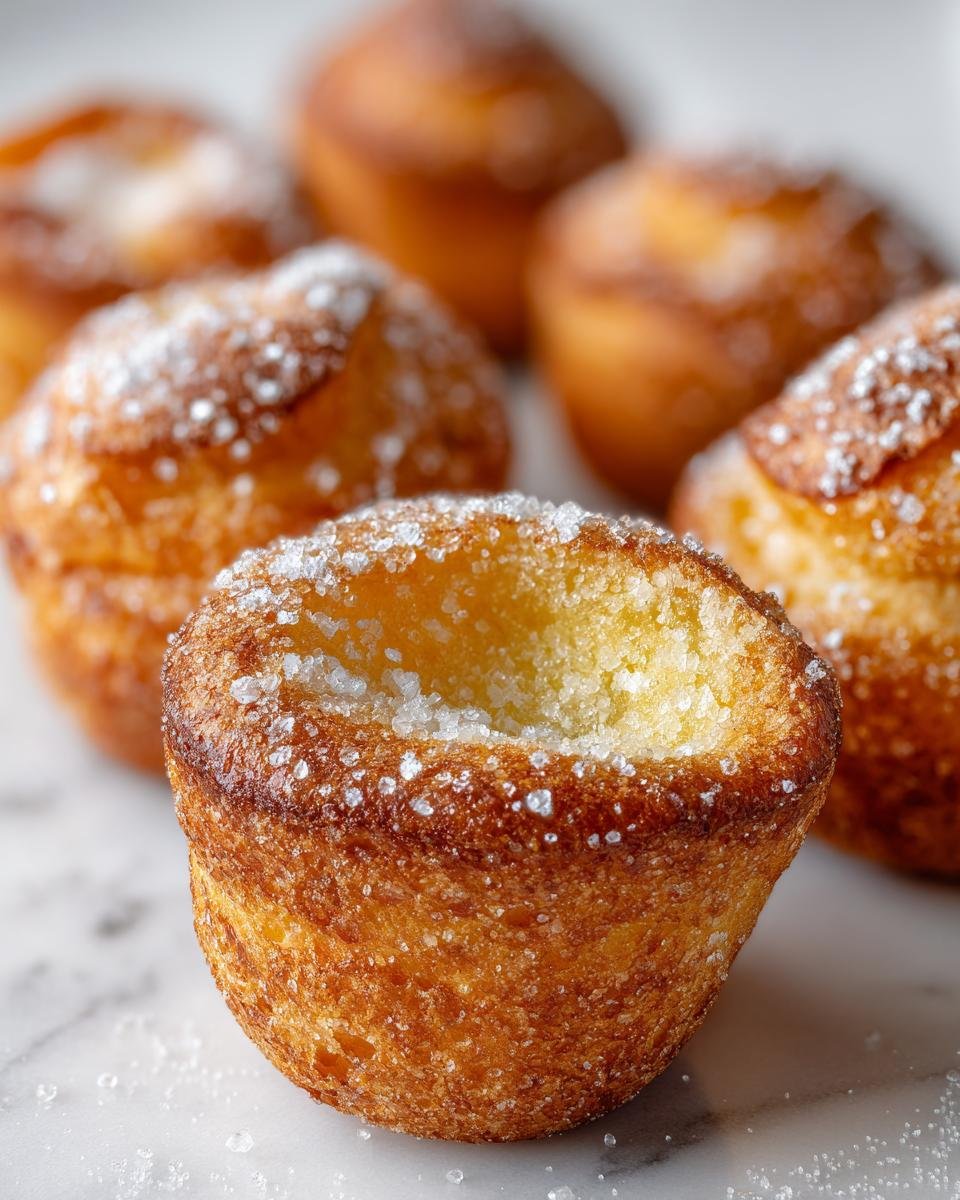
When they come out of the oven, they should be beautifully puffed up—think massive, golden-brown balloons! The magic happens when you check inside; you want most of that center to be hollow. That puffiness is what makes them superior. We want them to be golden on the outside but completely tender and airy inside. That’s how you know you nailed the authentic Portuguese popovers texture.
Essential Ingredients for Perfect Cavacas Portuguese Popovers
You don’t need a massive pantry to make these beauties, which is why I love them so much! We are using the foundation of classic choux pastry, but with just a couple of twists to bring in that Portuguese feel. Having these specific items ready before you start your 10 minutes of prep will save you so much time later on. We need water, butter, salt, flour, and eggs—simple, right?
Here is exactly what you need ready to go:
- 1 cup water
- 1/2 cup unsalted butter (softened slightly, but not melted!)
- 1/4 teaspoon salt
- 1 cup all-purpose flour (don’t even think about subbing this one out!)
- 4 large eggs (they need to be at room temperature, this is important!)
- 1/2 cup granulated sugar for dusting (this happens *after* they bake!)
Ingredient Notes and Substitutions for Cavacas Portuguese Popovers
Let’s talk about those eggs for a second, because this is where many people accidentally derail their choux pastry. You absolutely must use large eggs, and please, please make sure they are at room temperature. If they are ice cold, they will shock the warm dough, and you’ll end up fighting with a runny, separated mess instead of that gorgeous, thick paste we’re aiming for. You want the dough to be smooth and glossy enough to hold a soft shape when you mix it.
Also, quick reminder: that granulated sugar is ONLY for dusting immediately when the Cavacas Portuguese Popovers come out of the oven. It melts right into that hot crust, giving you that signature sweet crunch on the outside. Nothing else in the recipe is supposed to be overly sweet, believe it or not! If you’re wondering about other dairy swaps, sometimes people ask if they can use buttermilk, but for authentic choux, stick to the water and butter combo. If you’re looking for other baking ingredient advice, I have a great deep dive on ingredient swapping and substitutions if you ever need it!
Step-by-Step Instructions to Make Cavacas Portuguese Popovers
Okay, time to roll up our sleeves! This is where the real magic—the transformation from liquid to puffy goodness—happens. Don’t be intimidated by the term ‘choux pastry’; we are going to move through this process step by step, and you’ll be amazed at how quickly you have perfect Cavacas Portuguese Popovers ready to eat. Always have your muffin tin greased and ready to go before you even turn on the stove!
Preparing the Oven and Tin for Cavacas Portuguese Popovers
First things first, crank that oven up! We need serious heat for the big initial puff, so preheat your oven to 400 degrees F (that’s 200 degrees C). While that’s heating up, grab your standard muffin tin and give those cups a good, light greasing. You don’t want them sticking later when they’re puffed high!
Creating the Choux Dough Base for Cavacas Portuguese Popovers
Grab a medium saucepan and toss in the water, the butter, and that tiny bit of salt. Put this over medium-high heat and bring it to a true, rolling boil—it has to be boiling before the next step. Remember my rule: the water mixture MUST be bubbling! Once it hits that boil, yank it off the heat immediately. Dump in all the cup of flour at once and stir like crazy with a wooden spoon! Keep stirring until you form one cohesive, smooth ball of dough that physically pulls away from the sides of the pan. Now, put it back on SUPER low heat for just two minutes. You need to cook out that last bit of moisture, just stirring constantly.
Incorporating Eggs and Finalizing the Popover Dough
Now we cool things down slightly. Transfer that dough into your large bowl—or stand mixer if you’re feeling fancy—and beat it for about three minutes until it’s cooled down a little bit. You don’t want scrambled eggs! Next up: the eggs, one at a time. Beat really well after *each* egg incorporation. You’re looking for a dough that’s smooth, glossy, and maybe looks a little loose, but it should definitely hold its shape when you stop mixing. It shouldn’t be runny, but it won’t be stiff either!
Baking and Finishing the Cavacas Portuguese Popovers
Use rounded tablespoons to drop the dough into your prepared cups, filling them only about two-thirds full—they expand a lot! Then, slide them into that hot oven. Here’s the non-negotiable part: DO NOT OPEN THAT OVEN DOOR for the first 20 minutes of baking. Seriously, don’t peek! If you do, they will deflate instantly. They need about 25 to 30 minutes total to get golden brown and firm. Once they look gloriously puffed, take them out and immediately, while they are piping hot, dust that tops with that granulated sugar. That quick sugar coating is what seals the deal!
Tips for Success When Baking Cavacas Portuguese Popovers
You’ve got the dough, you’ve got the heat, but let me give you a few little insider secrets I’ve picked up over the years making choux pastry. Dealing with steam and heat is tricky, but once you follow these rules, your Cavacas Portuguese Popovers will be perfect every single time. It’s all about precision in the early stages, even though the overall recipe feels relaxed!
Here are my top three non-negotiable tips for that amazing puff:
- Don’t Rush the Drying Stage: After you add the flour and stir it into the water/butter mixture, remember we put it back on the heat to cook out the water, right? You need to keep stirring for those full two minutes until it forms that tight ball. If you skip this, you have too much residual moisture, and the eggs won’t absorb properly, leading to a flatter, soggy bake. We want to dry it just enough!
- Keep That Oven Door Closed—Promise! This is the golden rule for any popover or puff pastry. The temperature needs to be stable and hot for those first 20 minutes so the steam inside can push the dough upward. If you crack the door, the immediate rush of cooler surrounding air causes the steam structure to collapse, and bam—flat cavacas. It’s agony waiting, but you have to resist peeking!
- Use Room Temperature Eggs—Seriously: I know I mentioned this in the ingredients section, but it bears repeating because it’s vital here. Cold eggs added to the warm base dough seize up and struggle to incorporate fully. You end up with streaks of unincorporated egg white or yolk, which ruins the smooth, continuous structure needed to hold that glorious rise. Beat them in one at a time until you reach that glossy, smooth appearance.
If you want some extra reading on making small adjustments that bring big wins in the kitchen temperature-wise, take a look at my favorite baking tips page—it’s loaded with good stuff!
Storage and Reheating Cavacas Portuguese Popovers
So you made a super successful batch of Cavacas Portuguese Popovers, and maybe you couldn’t quite eat all twelve in one sitting—lucky you! These are best fresh out of the oven when they are piping hot and the sugar is just slightly melted, but sometimes life happens, right? Don’t worry, they store pretty well if you treat them right.
The biggest enemy here is moisture in the container. If you seal them up when they are even a little warm, condensation builds up, and those crispy shells turn immediately soggy. We just can’t have that! So, you absolutely must let them cool completely down to room temperature first. Like, touch-them-and-they-feel-cool all the way through.
Once they’re totally cool, pop them into an airtight container. I find that leaving them sitting out on the counter in that sealed container works great for up to two days. Any longer than that, and you risk them getting a little stale.
Bringing Your Cavacas Portuguese Popovers Back to Life
If you pull them out the next day and they’ve lost that glorious crispness, don’t panic and definitely don’t throw them out! Reheating them is honestly magic, and it takes almost no effort. Forget the microwave; that will make them chewy, and we are aiming for crisp!
Instead, you want to use dry heat. Pop those leftover Cavacas Portuguese Popovers onto a baking sheet. Set your oven (or toaster oven, which works brilliantly for just two or three!) to about 325 degrees F. Give them just 5 to 7 minutes in that warm heat. You’re not cooking them again; you’re just driving off any trapped moisture and firming up that crust again.
When they come out, they’ll be warm, slightly re-crisped, and ready to enjoy with your morning coffee. Just be quick about eating them after reheating, as they tend to soften faster once they cool down a second time!

Serving Suggestions for Your Cavacas Portuguese Popovers
Honestly, sometimes the very best way to eat something this perfect is completely plain, straight out of the oven while still warm! The exterior sugar gives you that little sweet hit, and the hollow interior is just begging to be appreciated for its airy structure. I absolutely love just grabbing one on my way out the door for a quick breakfast, and they stand up perfectly on their own.
But if you’re serving these up for a brunch spread or having friends over, we can absolutely dress them up just a tiny bit! Remember, these are meant to be light, so we don’t want heavy sauces or frostings weighing them down. Think bright flavors and simple pairings.
With Coffee or Tea
This is, hands down, my favorite way to go. The hint of cinnamon flavor you might find in some variations really sings alongside a strong, dark roast coffee. If you’re more of a tea person, a simple cup of black tea or even a mild green tea cuts through the richness of the butter beautifully. Honestly, when I make a batch, I usually make sure I have a pot of coffee brewing because that’s the only pairing these sweet pastries really need. If you’re ever looking for a fantastic coffee pairing without the pastry, you might like some ideas over on my simple coffee cake post!
Simple Sweet Spreads
If you simply *must* put something in the middle, keep it light! Since these are similar in structure to a cream puff exterior, you can slice them horizontally carefully once they’ve completely cooled. Try filling that little pocket of air with a thin spread of fruit preserves. I find that tart flavors work the best to contrast the subtle sweetness of the dough. Think about a sharp raspberry jam or perhaps even a homemade lemon curd—just a tiny bit, enough to taste, not enough to squish them flat when you close them up!
A Touch of Citrus
If you want to lean into that Portuguese influence, a very light dusting of citrus zest on top of the sugar once the cavacas cool down makes a surprisingly bright addition. Just use a microplane to grate a little lemon or orange zest right over the top. It gives them a beautiful aroma, and it’s an elegant little touch that takes zero extra time when you’re already doing breakfast!
Frequently Asked Questions About Cavacas Portuguese Popovers
It’s natural to have questions when you’re trying a new pastry, especially when it comes to the science behind a good puff! People always ask me about texture and ingredients because they want that perfect, light result every time. You’ve created a beautiful, slightly sweet pastry base with this recipe, but sometimes the oven just doesn’t cooperate. Let’s dive into the most common things I hear about making these delicious Cavacas Portuguese Popovers.
Can I use milk instead of water in the Cavacas Portuguese Popovers dough?
That’s a question every choux pastry baker asks at some point! Traditional Portuguese cavacas, like classic French pâte à choux, rely on water for that pure pop. Water simply bursts into steam faster and hotter than milk will, which is what gives these things that incredible, dramatic rise we are looking for. If you swap to milk, you end up adding extra fat and solids, which actually weighs the dough down a bit. So, for the absolute best, lightest, and fluffiest results? Stick with the water; it’s the secret to that airy texture!
How do I prevent my Cavacas Portuguese Popovers from collapsing?
Oh, the dreaded collapse! It’s crushing, isn’t it? Nine times out of ten, the collapse happens because the internal steam structure cools too fast. This means you either opened the oven door too early, or your oven temperature was too low when you first put them in. Remember what I said in the directions: do not open that oven door for the first 20 minutes! They need that sustained high heat to set the crust hard enough to hold their shape when the steam starts to dissipate. If you bake them just shy of 30 minutes and the oven is hot, they should stay puffed up beautifully!
Are Cavacas Portuguese Popovers supposed to be completely hollow?
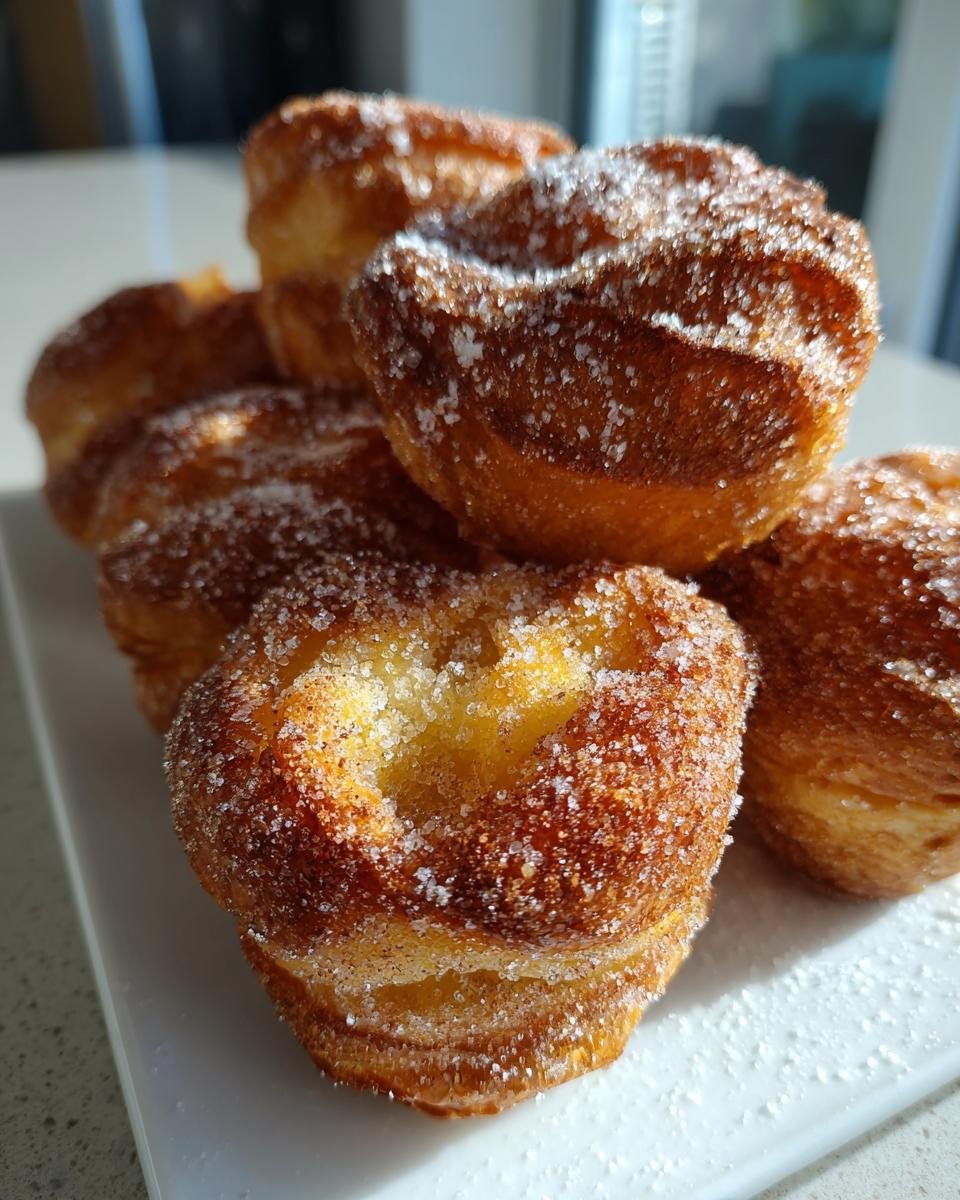
Yes, pretty much! When we talk about the ideal texture for these wonderful sweet pastries, we are talking about a crisp, golden shell with a huge pocket of air inside. They shouldn’t be dense like a muffin or cakey inside. If you bite into one and it feels slightly doughy or wet in the very center, it just means they needed another minute or two in the oven to fully dry out. You want the interior to be mostly empty space. This hollowness is exactly what makes them so light and such a perfect vehicle for a light dusting of sugar!
Nutritional Estimate for Cavacas Portuguese Popovers
Now, I know what you’re thinking. When something is this wonderfully light and airy, is it secretly loaded with sugar or fat? Well, because these Cavacas Portuguese Popovers rely on that simple base of water, butter, flour, and eggs, they aren’t as rich as, say, a traditional doughnut or a heavy cake. They are honestly quite reasonable for a sweet treat!
Here is a quick look at the numbers based on what the recipe yields (12 servings). Remember, this is just an estimate, and your final count will change based on how much sugar you actually dust on top or the exact brand of butter you use, so take these figures as a helpful starting point!
- Serving Size: 1 popover
- Calories: 150
- Sugar: 8g
- Sodium: 80mg
- Fat: 7g (with 4g of that being saturated fat)
- Carbohydrates: 19g
- Protein: 4g
See? Not bad at all for a beautiful piece of sweet pastry! These wonderful Portuguese popovers really do prove that you don’t need a massive calorie count to get a huge amount of satisfaction. They are just that perfectly balanced bite.
Share Your Portuguese Popovers Creations
Wow, we made it through the whole process—from boiling water to dusting with sugar! I am so excited for you to try these Cavacas Portuguese Popovers. Seriously, there is nothing better than that initial taste when they are still warm and crispy.
Now, this is the part where I really want to hear from you! Baking is always more fun when you can share the joy, and I love seeing how these traditional pastries turn out in everyone else’s kitchens. Did you get that perfect puff? Were your centers delightfully hollow? Did you dust them with extra sugar because you just couldn’t help yourself?
Please, if you loved these, pop down below and give the recipe a rating! A five-star rating helps other folks find this authentic Portuguese treat. Even better, if you snapped a picture of your beautiful popovers, I’d absolutely love to see them! You can share your snaps or any questions that popped up during the process by reaching out directly to me over on my contact page here.
Thank you so much for baking along with me today. I hope these sweet, airy popovers bring a little bit of sunny Portugal right into your home. Happy baking, friends!
Print
Cavacas Portuguese Popovers
- Total Time: 40 min
- Yield: 12 popovers 1x
- Diet: Vegetarian
Description
A simple recipe for traditional Portuguese Cavacas, light, airy, slightly sweet baked pastries.
Ingredients
- 1 cup water
- 1/2 cup unsalted butter
- 1/4 teaspoon salt
- 1 cup all-purpose flour
- 4 large eggs
- 1/2 cup granulated sugar for dusting
Instructions
- Preheat your oven to 400 degrees F (200 degrees C). Lightly grease a standard muffin tin.
- In a medium saucepan, combine the water, butter, and salt. Bring the mixture to a rolling boil over medium-high heat.
- Remove the saucepan from the heat. Add all the flour at once and stir vigorously with a wooden spoon until the mixture forms a smooth ball that pulls away from the sides of the pan.
- Return the pan to low heat and cook, stirring constantly, for about 2 minutes to dry out the dough slightly.
- Transfer the dough to a large bowl or stand mixer. Beat the dough on medium speed until slightly cooled, about 3 minutes.
- Add the eggs one at a time, beating well after each addition until the dough is smooth and glossy. The dough will look loose but should hold its shape.
- Drop rounded tablespoons of the dough into the prepared muffin cups, filling them about two-thirds full.
- Bake for 25 to 30 minutes, or until the popovers are puffed, golden brown, and firm to the touch. Do not open the oven door during the first 20 minutes of baking.
- Remove the cavacas from the oven and immediately dust the tops generously with granulated sugar while they are still hot.
- Serve warm or at room temperature.
Notes
- For the best rise, ensure your water mixture is boiling before adding the flour.
- Do not overbake; the centers should be mostly hollow.
- You can store cooled cavacas in an airtight container for up to two days.
- Prep Time: 10 min
- Cook Time: 30 min
- Category: Dessert
- Method: Baking
- Cuisine: Portuguese
Nutrition
- Serving Size: 1 popover
- Calories: 150
- Sugar: 8
- Sodium: 80
- Fat: 7
- Saturated Fat: 4
- Unsaturated Fat: 3
- Trans Fat: 0
- Carbohydrates: 19
- Fiber: 1
- Protein: 4
- Cholesterol: 75
Keywords: Cavacas, Portuguese Popovers, Pão de Deus, sweet pastry, choux pastry