
Oh, Italian desserts! There’s just nothing that beats the warmth and comfort of a sweet treat made with real love, right? Forget those airy, flimsy doughnuts you find everywhere else. We are talking about the real deal: the perfectly soft, pillowy Bomboloni Alla Crema. I remember the first time I successfully piped that rich *crema pasticcera* into the center of my first batch—I almost messed up the coating from excitement! I was convinced I’d get mushy centers, but surprisingly, everything held up. Trust me, making these authentic, cream-filled wonders at home is easier than you think, and the payoff is huge.
Why This Bomboloni Alla Crema Recipe Works So Well
What sets this recipe apart is that it aims for that quintessential Italian texture—it’s substantial but remains incredibly tender. We nail the authenticity factor by getting the dough enriched just right.
- The resulting doughnut is soft as a pillow, contrasting beautifully with the thick, cold cream filling.
- We focus heavily on the rising process to ensure that light, airy interior quality that great Italian doughnuts demand.
The Perfect Dough for Authentic Bomboloni Alla Crema
This dough is slightly enriched with butter and eggs, which keeps it softer than a standard ring doughnut dough. The magic starts with the yeast activation; if you skip that foaming step, you’ll end up with dense hockey pucks instead of fluffy pillows. Patience during that first rise is non-negotiable!
Achieving Golden Perfection When Frying Bomboloni Alla Crema
Frying correctly is key to making stunning Bomboloni Alla Crema. You absolutely must keep your oil steady at 350°F (175°C). If it’s too cool, the dough soaks up oil horribly. Too hot, and the outside burns before the inside cooks. Hit that temperature exactly right, and you get that gorgeous, signature pale band running around the middle of your golden-brown fried dough. That white ring proves you did it perfectly!
Essential Ingredients for Making Bomboloni Alla Crema
Getting the right ingredients is the foundation, and honestly, it’s where you can really taste the difference between a decent doughnut and an amazing Italian treat. I’ve broken down exactly what you need so you don’t miss a thing when you’re getting ready to mix that beautiful dough.
Dough Components for Your Bomboloni Alla Crema
You need your base components ready to go. Pay close attention to the sugar—we use it for two different jobs!
- 1 cup warm milk (Make sure it’s just warm to the touch, not hot!)
- 2 1/4 teaspoons active dry yeast
- 1/4 cup plus 1 teaspoon granulated sugar (Yes, two separate measurements!)
- 2 large eggs
- 1/2 teaspoon salt
- 3 1/2 cups all-purpose flour
- 1/4 cup unsalted butter, softened for creaming
Pastry Cream and Finishing Touches for Bomboloni Alla Crema
This is where the sweet, creamy center comes from. If you want your filling to really sing, use a good quality vanilla bean paste or extract in your cream—it makes the custard layers taste deeper and richer. If you haven’t made it yet, you can see exactly how I whip up my pastry cream right here.
- 1 cup pastry cream (*crema pasticcera*)
- Vegetable oil for frying (You need a good deep pool of it!)
- Powdered sugar for that crucial final dust

Step-by-Step Instructions for Perfect Bomboloni Alla Crema
If you want true, fluffy Italian doughnuts, you have to follow these steps carefully. Don’t rush the yeast, don’t skimp on the kneading, and definitely don’t skip the second rest! These little actions add up to soft, beautiful results. If you’re looking for general technique reinforcement, check out my deep-dive on essential baking tips for better structure.
Activating Yeast and Mixing the Bomboloni Alla Crema Dough
First things first: bloom that yeast! Mix your warm milk, the little teaspoon of sugar, and the yeast in a small bowl. Let it sit for about five minutes until it gets foamy—that tells you the yeast is alive and ready to work its magic. While that wakes up, whisk your flour, the main quarter cup of sugar, and the salt together in a big bowl. Once the yeast looks happy, pour it into the flour mix along with your two eggs and that softened butter. Mix it all up until it looks like a messy, shaggy ball—no panic needed yet!
Now for the hard work! Turn that shaggy mess onto a lightly floured counter and start kneading. You need commitment here—knead it for a solid 8 to 10 minutes. When you’re done, it should feel smooth and springy under your hands. Pop that smooth dough into an oiled bowl, cover it up, and let it hang out in a warm spot for almost two hours, or until it has truly doubled in size. Don’t short the rise!
First Rise and Shaping Your Bomboloni Alla Crema
Once the dough has doubled, gently punch the air out—it’s a satisfying step! Roll the dough out evenly until it’s about a half-inch thick. Now, take your 3-inch round cutter and start punching out your beautiful circles. Lay these rounds onto baking sheets lined with parchment paper. You need one more rest now, about 30 minutes. This final rest, or proofing, is what guarantees those pillowy results when they hit the hot oil.
Frying and Filling Your Delicious Bomboloni Alla Crema
Time for the fun part! Heat your oil in a deep pot until it hits exactly 350°F (175°C). Fry the doughnuts in small batches—seriously, don’t overcrowd the pot, or the temperature will plummet! Cook each side for only 2 to 3 minutes until they are gorgeously golden brown. When they come out, immediately put them on paper towels to drain off any excess oil. Once they cool slightly so you don’t burn yourself, grab your piping bag fitted with a long tip and fill each one generously with that amazing pastry cream.
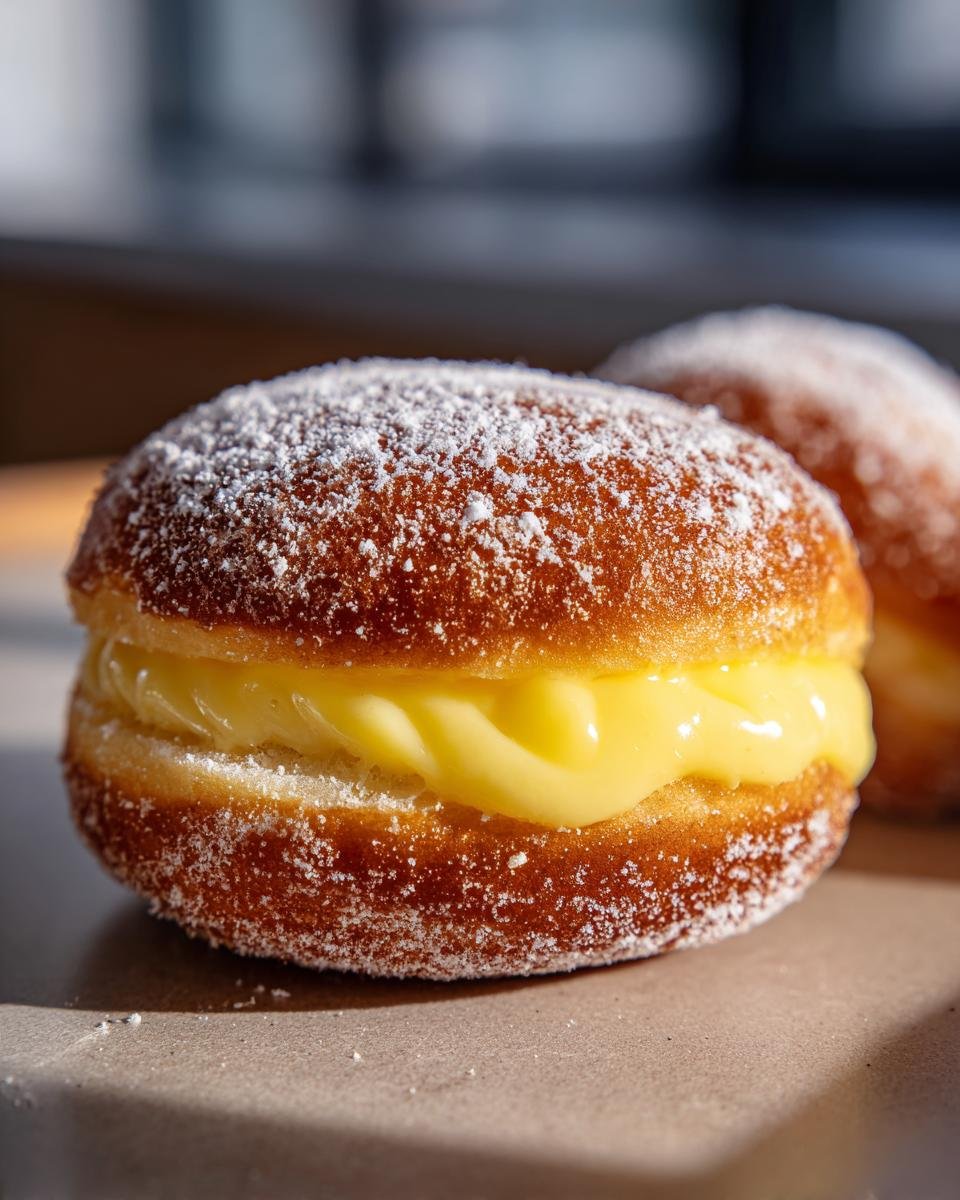
If you notice your doughnuts suddenly looking greasy and maybe not puffing up right, check your oil temperature immediately; oil that’s too cool will suck right into the dough.
Tips for Success When Making Bomboloni Alla Crema
Okay, listen up! Making dough rise can be frustrating if your kitchen is chilly. Here are a couple of my tried-and-true tricks that guarantee you get those light, airy Italian doughnuts every single time, even if your kitchen feels a little drafty in the winter.
Handling the Dough for the Best Bomboloni Alla Crema Rise
Dough needs warmth and peace to rise properly, but nobody wants a drafty kitchen just for their dough! My secret is putting the oiled bowl right inside your oven—but make sure the oven is OFF, obviously! You can even turn the oven light on; that tiny bit of ambient heat creates the perfect cozy microclimate. Cover that bowl tightly with plastic wrap so it doesn’t dry out on top. Just give it space and keep it away from any windows or doors where a cold breeze might sneak in during that long rise time.
Tips for Filling Bomboloni Alla Crema Without Ripping
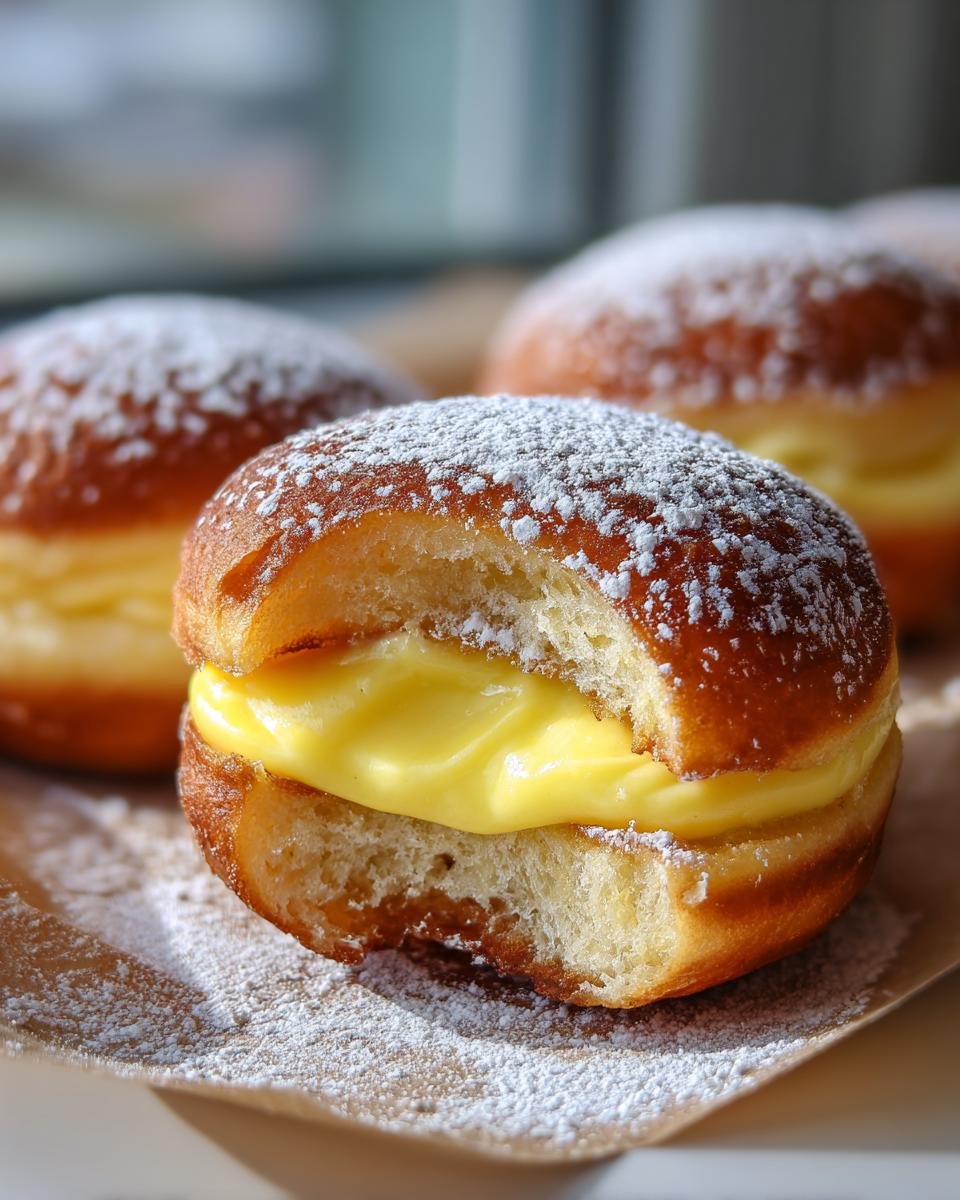
This is where most people get nervous, right? You’ve made this beautiful, fluffy fried ball, and you don’t want to destroy it trying to inject the pastry cream. First, make sure your *crema pasticcera* is really cold—that will help it hold its shape when it goes inside the warm dough. Second, use that long, thin piping tip. Don’t try to inject the cream straight down into the middle top, because that just forces the dough apart.
Instead, insert the tip slightly off-center, down toward the bottom edge of the bombolone. Pipe slowly, letting the cream fill the center cavity. You can wiggle the tip slightly as you pull it out. This way, the hole you made seals up around the tip, and you get a perfectly filled Italian doughnut without a giant rip on top!
Ingredient Notes and Substitutions for Bomboloni Alla Crema
The ingredients here are pretty specific because we are going for that authentic Italian texture, but don’t panic if you’re missing one thing! The milk quality matters for the dough—if you happen to have buttermilk instead of regular milk, that’s an easy swap, but you’ll want to check out how to adjust for that acidic liquid if you need to make buttermilk substitutions.
For the pastry cream, please use the best vanilla you own. If you’re in a huge pinch and can’t make the *crema pasticcera* ahead of time, a high-quality store-bought vanilla pudding can work in an emergency, but I’m telling you, homemade is infinitely better!
Storage and Reheating Instructions for Bomboloni Alla Crema
If I’m being totally honest, these Bomboloni Alla Crema are absolutely the best when they are eaten the same day you make them. Think about it: warm, slightly yeasty dough hugging cold, silky pastry cream—you just can’t beat that contrast!
That said, sometimes life happens, and you might have a couple left over. If you’ve already filled them, try to eat them within about four hours maximum. The moisture from the *crema pasticcera* will start soaking into the fried dough and can make them a little soggy after that point. They definitely don’t reheat well once the cream is inside, so don’t even try putting them in the microwave!
Now, if you’re smart and you follow my lead on making things ahead, store the pastry cream separately. Keep that chilled in an airtight container for up to three days—it actually gets a little silkier overnight! Then, you can fry your doughnuts fresh in the morning, let them cool slightly, and fill them right before you serve. That’s the professional way to serve homemade Italian doughnuts, trust me!
If you absolutely must store the filled ones overnight, place them loosely in an airtight container at room temperature. Avoid the fridge if you can, because cold temperatures tend to dry out yeast breads faster. Just know they won’t have that perfect, fresh-from-the-fryer fluffiness the next day.
Serving Suggestions for Your Italian Bomboloni Alla Crema
You’ve done the frying, you’ve done the filling—now, how do you serve these masterpieces? The authentic Italian way means pairing them with the perfect beverage. Forget huge milky coffees.
You absolutely need a strong, dark espresso shot alongside each one. The bitterness cuts right through the richness of the fried dough and the sweetness of the *crema pasticcera* beautifully. If you’re enjoying them as a late evening treat, a small glass of chilled Vin Santo, that sweet Italian dessert wine, is incredible with the creamy filling. It makes even a simple afternoon feel like a celebration in Tuscany!
Frequently Asked Questions About Bomboloni Alla Crema
I always get the same few questions when people first try making these at home! Yeast doughs can feel tricky sometimes, but once you know these little secrets, you’ll be whipping up these Italian doughnuts like you’ve been making them for years. Here are the things folks always ask me.
Can I bake Bomboloni Alla Crema instead of frying?
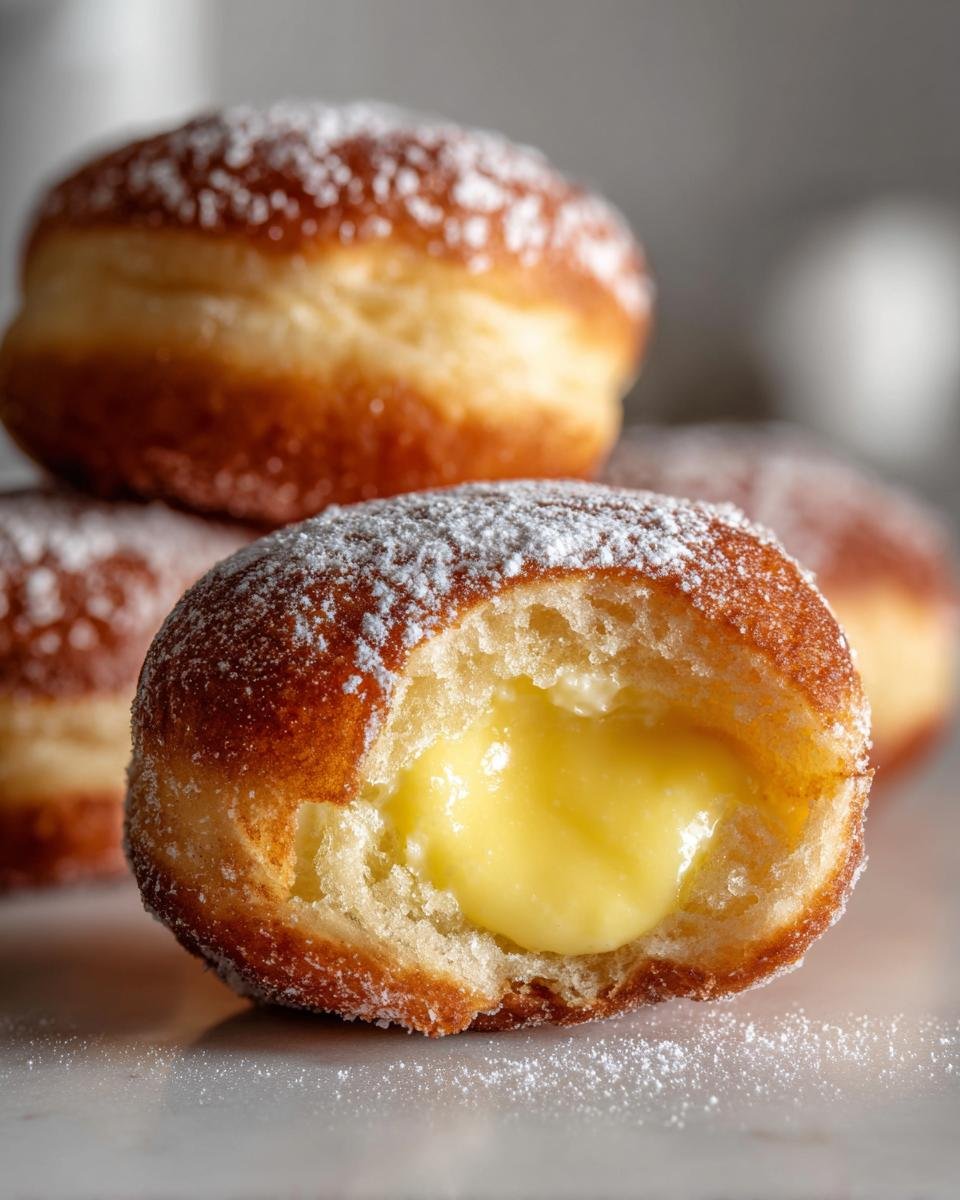
Oh, you *can*, but should you? Honestly, no. Frying is essential for authentic Bomboloni Alla Crema. When you fry them, the exterior sets instantly while the heat steams the inside, creating that soft, slightly chewy crumb that holds up to the cream. If you bake them, you end up with something that tastes much more like a slightly denser sweet roll or a standard baked doughnut, but you completely miss that signature fried texture—and you definitely won’t get that gorgeous white ring around the middle!
How far in advance can I make the pastry cream (crema pasticcera)?
This is the great makeup trick in the kitchen! The pastry cream (*crema pasticcera*) is perfect for making ahead. I usually make a huge batch right at the start of the week. Because it’s so rich and full of sugar, it keeps beautifully in an airtight container in the fridge for up to three or four days. Make sure it has plastic wrap touching the surface so a skin doesn’t form. Then, just give it a quick whisk to loosen it up right before you load up your piping bag.
What is the difference between Bomboloni and standard doughnuts?
That’s a common confusion, but there are two huge differences! First, Bomboloni are traditionally filled, usually with that amazing *crema pasticcera*, whereas a standard American ring doughnut is just glazed or left plain. Second, the big visual cue: Bomboloni are round balls—they have no hole in the center! They are made from a slightly richer, slightly sweeter yeasted dough than what you might use for something like a cruller.
If you’re looking for recipes that focus on the yeast dough structure without filling, you might enjoy checking out my recipe for best vanilla donuts, though the dough balance will be slightly different!
Nutritional Estimates for Bomboloni Alla Crema
Now, let’s talk real talk. These are not diet food, folks; they are fried, cream-filled perfection! We are using enriched dough and deep frying, so the numbers reflect that indulgence. If you go heavy on the pastry cream, those numbers will climb, so just keep that in mind.
Here is a general estimate for one serving of these incredible Italian doughnuts when made according to this recipe:
- Serving Size: 1 doughnut
- Calories: 350
- Fat: 18g
- Saturated Fat: 5g
- Carbohydrates: 40g
- Sugar: 20g
- Protein: 7g
- Cholesterol: 75mg
Remember, these numbers are estimates! How much oil your dough absorbs during frying and exactly how much pastry cream you pipe in can change the final count a bit. But honestly, when they taste this good, what’s a few extra calories?
Nutritional Estimates for Bomboloni Alla Crema
Now, let’s talk real talk. These are not diet food, folks; they are fried, cream-filled perfection! We are using enriched dough and deep frying, so the numbers reflect that indulgence. If you go heavy on the pastry cream, those numbers will climb, so just keep that in mind.
Here is a general estimate for one serving of these incredible Italian doughnuts when made according to this recipe:
- Serving Size: 1 doughnut
- Calories: 350
- Fat: 18g
- Saturated Fat: 5g
- Carbohydrates: 40g
- Sugar: 20g
- Protein: 7g
- Cholesterol: 75mg
Remember, these numbers are estimates! How much oil your dough absorbs during frying and exactly how much pastry cream you pipe in can change the final count a bit. But honestly, when they taste this good, what’s a few extra calories?
Print
Bomboloni Alla Crema (Italian Cream-Filled Doughnuts)
- Total Time: 165 min
- Yield: 12 servings 1x
- Diet: Vegetarian
Description
Recipe for making classic Italian cream-filled doughnuts, known as Bomboloni Alla Crema.
Ingredients
- 1 cup warm milk
- 2 1/4 teaspoons active dry yeast
- 1/4 cup granulated sugar plus 1 teaspoon for yeast
- 2 large eggs
- 1/2 teaspoon salt
- 3 1/2 cups all-purpose flour
- 1/4 cup unsalted butter, softened
- Vegetable oil for frying
- 1 cup pastry cream (crema pasticcera)
Instructions
- Combine warm milk, yeast, and 1 teaspoon sugar in a bowl. Let stand for 5 minutes until foamy.
- In a large bowl, whisk together the remaining sugar, salt, and flour.
- Add the yeast mixture, eggs, and softened butter to the dry ingredients. Mix until a shaggy dough forms.
- Knead the dough on a lightly floured surface for 8-10 minutes until smooth and elastic.
- Place the dough in a lightly oiled bowl, cover, and let rise in a warm place for 1.5 to 2 hours, or until doubled in size.
- Punch down the dough and roll it out to about 1/2 inch thickness.
- Use a 3-inch round cutter to cut out doughnut shapes. Place them on parchment-lined baking sheets.
- Cover the cut dough rounds and let them rest for 30 minutes.
- Heat vegetable oil in a deep pot to 350°F (175°C).
- Fry the doughnuts in batches for 2-3 minutes per side until golden brown.
- Remove doughnuts with a slotted spoon and drain on paper towels.
- Once cooled slightly, fill each bombolone generously with pastry cream using a piping bag fitted with a long tip.
- Dust with powdered sugar before serving.
Notes
- For best results, ensure your milk is warm, not hot, to activate the yeast properly.
- Do not overcrowd the pot when frying; this lowers the oil temperature.
- Pastry cream can be made ahead of time and chilled.
- Prep Time: 45 min
- Cook Time: 20 min
- Category: Dessert
- Method: Frying
- Cuisine: Italian
Nutrition
- Serving Size: 1 doughnut
- Calories: 350
- Sugar: 20
- Sodium: 150
- Fat: 18
- Saturated Fat: 5
- Unsaturated Fat: 13
- Trans Fat: 0
- Carbohydrates: 40
- Fiber: 2
- Protein: 7
- Cholesterol: 75
Keywords: Bomboloni, Italian doughnuts, cream-filled, fried dough, Italian pastry, crema pasticcera